


How Do You Fit a Tactical Dog Harness Properly?
Last Updated: October 25, 2026
Quick Summary
To fit a tactical dog harness properly, loosen every strap, put the harness on, then tighten the chest strap first, the belly strap snug behind the front legs, the back strap so the handle sits level, and the shoulder straps last. Run the two-finger test at every strap and recheck the fit after a short walk.
- Measure girth at the widest part of the rib cage and neck at the base, with a soft tape.
- Match your girth measurement to the size chart range rather than your dog's weight.
- Tighten one strap, then its mirror on the other side by the same amount, and recheck.
- Fit the empty harness first, then add pouches one at a time and recheck the two-finger test.
- Recheck fit every few weeks and before a big trip, since coats and muscle change.
Table of Contents
- Why a Proper Fit Matters for a Tactical Dog Harness
- How to Measure a Dog for a Harness
- How to Adjust a Dog Harness Step by Step
- How Tight Should a Dog Harness Be?
- Signs a Dog Harness Does Not Fit
- Movement Checks and Rechecking Fit Over Time
- Gear Up for Your Next Adventure
- Frequently Asked Questions
Why a Proper Fit Matters for a Tactical Dog Harness
A tactical dog harness only works when it fits correctly. A loose harness twists and rubs. A tight one restricts movement and pinches skin. Either way, your dog pays the price on the trail.
Here at Danielson Cove, we build gear for dogs who cover real ground. A proper fit is the difference between a confident working partner and a dog who stops every mile to scratch.
Tactical harnesses carry more than a leash. They hold MOLLE pouches, handles, and attachment points. A 2025 review of walking gear notes that harness design involves trade-offs, and front-clip styles that don't tighten may balance comfort against pulling control (review of collars, harnesses, and head collars for walking).
Fit matters more on a tactical harness because the load sits on specific points. Get those points right and the gear disappears into the background. Get them wrong and every step becomes a negotiation.
If you want to understand how tactical design differs from a standard harness, read our breakdown of tactical dog harness vs standard harness before you start adjusting straps.
How to Measure a Dog for a Harness
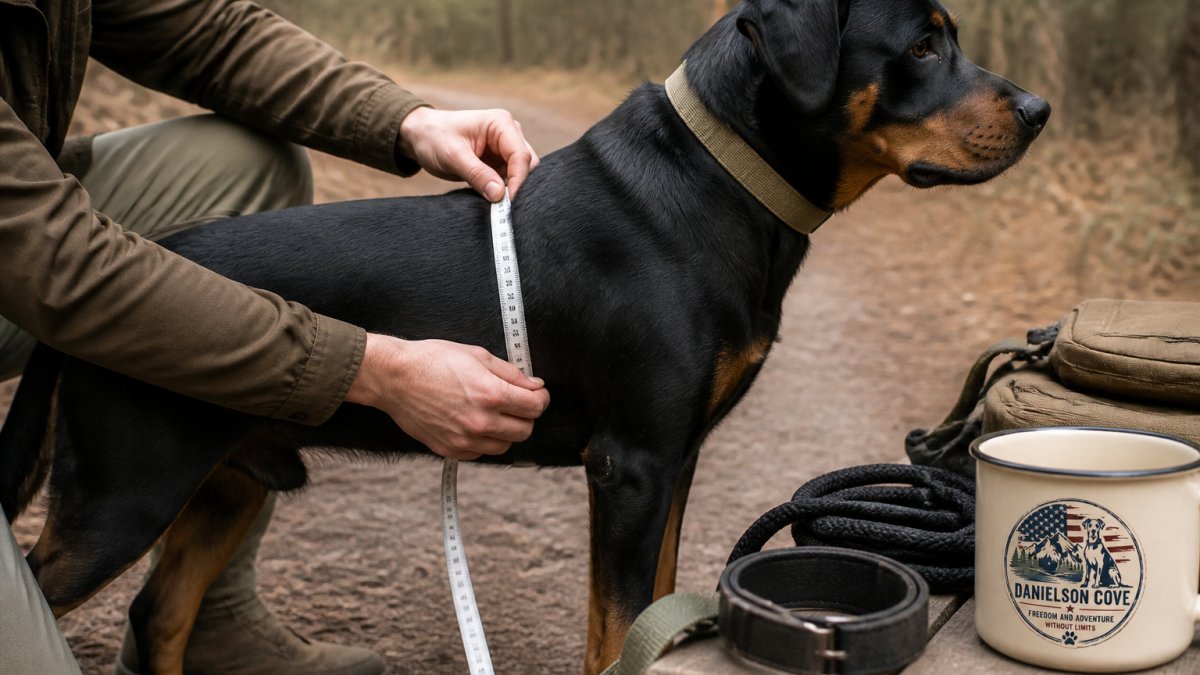
Measuring a dog for a harness takes two numbers and about five minutes. You need the girth and the neck measurement. Everything else follows from those.
Girth is the widest part of the rib cage, just behind the front legs. Neck measurement is the base of the neck, where a collar would sit. Use a soft tape, and keep it snug against the fur without pulling tight.
A few things trip people up:
- Measure a standing dog, not a sitting one
- Measure at the end of the day, when a dog is warm and relaxed
- Add a little room for a thick winter coat
- Write both numbers down before you shop
Reading the Size Chart
Size charts vary by brand, so always check the chart on the product page. Match your girth measurement to the range, not your dog's weight. Two dogs of the same weight can wear different sizes. If your dog lands between sizes, size up and tighten the straps.
Our military tactical adjustable dog harness lists sizing by girth so you can match your numbers directly. Measure first, then choose.

How to Adjust a Dog Harness Step by Step
Adjusting a dog harness follows a set order. Loosen everything first, put the harness on, then tighten one strap at a time. Skipping the order is the most common reason a harness ends up twisted, with one side tighter than the other.
Follow these steps:
- Loosen all straps before the harness goes near your dog. Back every adjuster off to its widest setting so the harness drapes on rather than being pulled on.
- Slide the harness over the head or step the front legs through, depending on the design. Over-the-head designs need the neck opening at its loosest; step-in designs need the belly strap fully extended.
- Fasten the buckles at the chest and belly. Buckles should close with light pressure, not a fight. If you have to force a buckle, the strap is still too short.
- Set the chest strap first so the breastplate sits centered on the sternum, not riding up toward the throat or dropping toward the belly.
- Tighten the belly strap until it sits snug behind the front legs. This is the strap that carries most of the load on a pulling dog, so it should be the snugger of the two girth points.
- Adjust the back strap so the handle sits level on the shoulders. A handle that tilts forward or back means the back panel is off-center.
- Set the shoulder straps last. They should follow the angle of the shoulder blade, not cut across it. On most dogs the strap sits roughly parallel to the front leg when the dog stands square.
- Check the two-finger test at every strap, then watch your dog move before you clip on a leash.
Work front to back and side to side. Tighten one strap, then tighten its mirror on the other side by the same amount, and recheck. Adjusting only one side is how harnesses end up rotating on the dog's body after a few minutes of walking.
Fitting the MOLLE Panel, Handle, and Attachment Points
This is where a tactical harness differs from a standard walking harness, and where most fitting guides stop short. The base fit has to be correct before any of these features work as intended.
The MOLLE panel. The panel should sit flat against the back, centered over the spine, and stay there when the dog trots. Two failure modes to watch for:
- Panel slides toward the shoulders. The back strap is too long or the chest strap is too loose. Shorten the back strap first, then recheck the chest.
- Panel slides toward the tail. Usually the belly strap is too loose, letting the whole harness rotate rearward under load. Take up the belly strap a notch at a time.
A panel that rides up onto the withers will press on the shoulder blades once you add pouches, so fix the slide before you load it.
The handle. A handle should rest level and slightly forward of the highest point of the back, so a lift pulls straight up rather than tipping the dog sideways.
Attachment points. Back attachment points should sit behind the shoulder blades, not on top of them, so a leash angle does not pull the harness across the shoulders.
Load order matters. Fit the empty harness first, then add pouches one at a time and recheck the two-finger test after each addition.
For a deeper look at these features, our military grade dog harness buying guide walks through panels, handles, and hardware.
Adjusting a tactical harness follows a set order, and each strap has its own job.
Tactical Dog Harness Molle System Vest →
| Step | What to do |
|---|---|
| 1 | Loosen all straps to their widest setting |
| 2 | Slide over the head or step front legs through |
| 3 | Fasten chest and belly buckles with light pressure |
| 4 | Set the chest strap so the breastplate sits centered |
| 5 | Tighten the belly strap snug behind the front legs |
| 6 | Adjust the back strap so the handle sits level |
| 7 | Set shoulder straps to follow the shoulder blade angle |
| 8 | Run the two-finger test, then watch your dog move |
How Tight Should a Dog Harness Be?
A dog harness should be snug enough to stay in place but loose enough to allow full movement. The two-finger test is the simplest check. You should fit two fingers under every strap, flat, without forcing them.
Too tight causes pinching at the armpits and shoulders. Too loose lets the harness twist when your dog pulls or turns. Both problems show up fast on a long hike.
Check these spots:
- Chest strap: two fingers, no more
- Belly strap: snug behind the front legs
- Neck opening: clear of the throat
- Shoulder straps: full range of motion, no binding
Signs a Dog Harness Does Not Fit
Signs a dog harness does not fit show up in how your dog moves before they show up on the skin.
Harness twists to one side. Usually an uneven shoulder strap or an unbalanced load.
Harness slips forward over the shoulders. The chest strap is too loose or the back strap is too long.
Harness rotates rearward or rides up the back. The belly strap is too loose.
Red marks or pressure points on the chest. The breastplate is too small or the chest strap is over-tightened.
Stiff or shortened stride. The shoulder straps are restricting the shoulder blade.
Reluctance to walk, sit, or lie down. Often a pressure point the dog feels before you can see it.
Head shaking or ear rubbing after the harness goes on. Usually the neck opening is too tight or the chest strap is riding into the throat.
A common mistake is blaming the dog for pulling when the harness is the problem. A poor fit creates discomfort, and discomfort creates resistance.
If chafing is your issue, our guide to preventing dog harness chafing outdoors covers the causes and fixes.
Movement Checks and Rechecking Fit Over Time
Fit changes. Puppies grow, coats thicken in winter, and older dogs lose muscle. Check the fit every few weeks, and always before a big trip.
Run through this routine after any adjustment:
- Walk your dog on a loose leash for a minute
- Ask for a sit, then a lie down
- Watch for twisting or shifting
- Check the two-finger test again
- Look for red marks after removal
A harness that fit in spring may need a strap change by fall. That's normal, not a defect.
Gear Up for Your Next Adventure
Fitting a tactical dog harness properly comes down to measurement, patient adjustment, and honest observation of how your dog moves. Do those three things and the gear stays out of the way, which is exactly what you want on a long day out.
That's the standard we build to at Danielson Cove. Our tactical harnesses use adjustable straps at every contact point, reinforced stitching for rough terrain, and MOLLE webbing for the gear you actually carry. We also donate 15% of all profits to Daisy's Dane Sanctuary, a Great Dane rescue, because caring for dogs is the whole point of what we do.
Get started with Danielson Cove and gear up for the trail with a harness that fits like it was made for your dog.
Frequently Asked Questions
What is the correct way to measure a dog for a harness?
Use a soft tape to measure the widest part of the rib cage, just behind the front legs. Keep the tape snug but not tight, and record the number in inches. For a tactical dog harness, also note the neck measurement and check the brand's size chart. Danielson Cove recommends measuring girth before ordering because their harnesses fit true to size across S through XL.
How tight should a tactical dog harness be?
A tactical dog harness should be snug enough that it does not twist or slip, but loose enough to slide two fingers under each strap. Check the chest and belly straps after every adjustment. If the harness leaves marks or the dog resists movement, loosen it one notch. A 2025 review notes that non-tightening front-clip designs can balance comfort and pulling control, so fit matters as much as style.
How do you adjust a tactical dog harness so it does not rub?
Loosen the chest strap first, then set the belly strap so the breastplate sits flat against the chest, not over the shoulders. Position straps behind the front legs and clear of the armpits. Walk the dog for five minutes, then check for red spots or bunching.
How often should you check a dog's harness fit?
Check fit every month and before any multi-day trip. Puppies and young dogs need weekly checks during growth spurts. Coat changes, weight gain, and strap wear also affect fit. Look for frayed webbing, loose buckles, and stretched elastic. Danielson Cove's tactical dog harness uses adjustable straps and reinforced stitching, but routine checks keep it secure on rough terrain.
