


7 GPS Tracker and Dog Harness Compatibility Rules for 2026
Last Updated: November 3, 2026
Quick Summary
Dog harness compatibility comes down to mounting your tracker flat on the back panel between the shoulder blades, clear of metal hardware and thick padding. Keep a finger's width of clearance from buckles and D-rings, and confirm the harness fits snugly so the panel stays level.
- Attaching a tracker to a harness takes about five minutes and needs no special tools.
- Mount the tracker on the back panel, not the chest strap or neck area.
- A loose harness slides and drags the tracker; a tight one rubs.
- Keep fence systems on their own collar and mount your tracker on the harness.
- Check battery, waterproofing, coverage, weight, and mounting before you buy.
Table of Contents
- Why Dog Harness Compatibility Decides Whether Your Tracker Works
- How to Attach a GPS Tracker to a Dog Harness
- Harness vs. Collar Mounting: Signal and Safety Tradeoffs
- GPS Tracker Fit and Comfort for Dogs
- The Best Dog Tracker Without Subscription for Harness Users
- GPS Dog Collar Fence Systems and Harness Wear
- Battery, Waterproofing, and Coverage Checks Before You Buy
- Gear Up Your Trail Setup at Danielson Cove
- Frequently Asked Questions
Why Dog Harness Compatibility Decides Whether Your Tracker Works
A tracker that clips to a collar is useless if your dog slips the collar on a trail. That is why dog harness compatibility matters more than most buyers expect. According to peer-reviewed research on tracking device health risks, a harness is the safer mounting point for tracking devices, since it avoids the radio-frequency and pressure risks of a collar.
Here is the core problem. Most trackers are sold as collar accessories. Harness webbing is wider, sits differently, and puts the device against a different part of the dog's body. Get the pairing wrong and you lose signal, comfort, or both. Below, we explain the seven rules that decide whether a tracker and harness actually work together, and how Danielson Cove approaches each one.
How to Attach a GPS Tracker to a Dog Harness
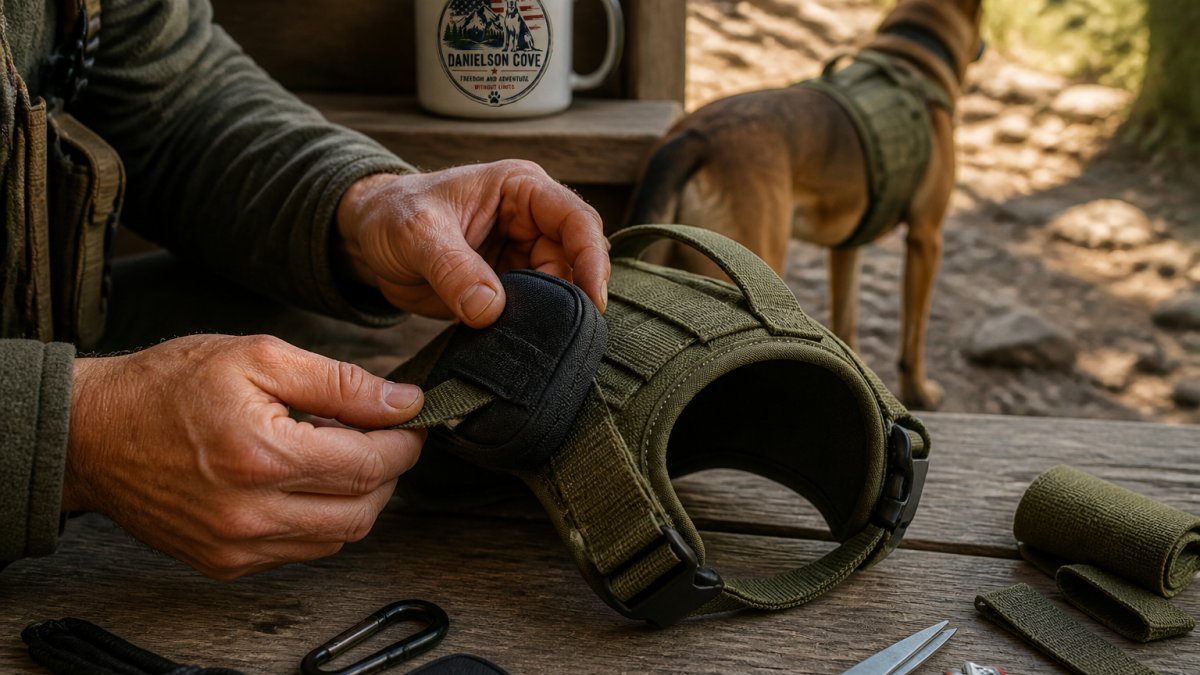
Attaching a tracker to a harness takes about five minutes and needs no special tools. The device should sit flat against the webbing, clear of buckles and moving straps. A pouch, a silicone holder, or a webbing loop all work, as long as the tracker cannot swing free. The difference between a mount that holds for a season and one that fails on the first creek crossing comes down to three things: how the device is secured, where it sits, and what it sits next to.
Mounting Hardware and DIY Solutions
Mounting hardware ranges from purpose-built pouches to simple zip-tie loops, and each has a place depending on your harness and your tracker's housing.
- Silicone or fabric pouch. The most secure option for a tracker with a rounded or irregular housing. Thread the pouch's strap through a webbing loop or MOLLE row so the device sits flat. Pouches also cushion the device against impact when a dog pushes through brush.
- MOLLE webbing rows. Many tactical harnesses carry horizontal MOLLE rows across the back panel. A small pouch or a hook-and-loop panel attaches directly to these rows without extra straps, which keeps the mount low-profile and reduces snag risk.
- Zip ties. A workable field fix, but only with wide, UV-rated ties. Thin ties and cord stretch when wet, and a stretched mount lets the tracker swing, which degrades both comfort and signal. Trim the tail flush so it does not catch on brush.
- Hook-and-loop (Velcro) panels. Fast to attach and remove, which suits trackers you charge every few days. The tradeoff is that hook-and-loop weakens with mud and repeated wet-dry cycles, so check the hold before every trip.
- Custom pouch or 3D-printed cradle. For trackers with unusual dimensions, a fitted cradle holds the device tighter than a universal pouch and keeps the antenna oriented consistently.
Our Tactical Dog Harness Molle System Vest features a MOLLE webbing system for attaching gear, ID holders, and storage pouches.

Watch out: A mount that lets the tracker hang below the harness webbing will swing with every stride, and a swinging tracker both chafes and loses signal as the antenna orientation changes.
Placement: Where the Tracker Should Sit
The tracker belongs on the back panel, between the shoulder blades. This spot keeps the antenna facing up, which helps signal reliability. Avoid the chest strap, where leg motion knocks the device around, and avoid the neck area entirely.
Placement also affects signal in ways that are not obvious from the harness alone. Thick harness padding, metal D-rings, and metal buckles can block or reflect GPS and Bluetooth signals, so a tracker pressed directly against a metal ring or buried under a padded panel may read worse than the same tracker mounted a few inches away on open webbing.
Weight distribution matters as much as position. A tracker adds ounces to one small patch of webbing, and if that patch sits over a bony spot or a pressure point, chafing follows within hours. Center the device on the back panel so the load sits over the broadest part of the dog's back, and check that the harness does not shift when the dog trots, turns, and sits.
Before adding anything, confirm the harness itself fits. A loose harness slides, which drags the tracker with it, and a tight one rubs. Our guide on how to fit a tactical dog harness properly walks through the strap checks that keep both problems away.
Harness vs. Collar Mounting: Signal and Safety Tradeoffs
Harness mounting can offer a secure alternative for dogs that back out of collars, while collar mounting places the antenna higher. For dogs that slip collars, that tradeoff is worth considering.
Signal reliability depends on antenna position, not strap choice alone. A tracker on a harness back panel usually reads fine. A tracker buried under a saddlebag does not.
That difference matters most in three situations:
- Dense cover. In heavy timber or deep brush, a lower antenna loses more satellite fixes than a higher one. A harness-mounted tracker still works, but expect slower location updates and more gaps in the track log.
- Metal hardware nearby. A tracker pressed against a metal D-ring or under a metal buckle can lose signal even on open ground. Keep clearance between the device and any metal, and mount on the outer surface of the harness rather than tucking the tracker beneath a strap.
- Thick padding. Heavily padded harnesses absorb and deflect signal. A tracker mounted on top of the padding reads better than one slipped under a padded panel for a cleaner look.
For most dogs, the safety advantage of a harness outweighs the signal penalty, because a tracker that stays on the dog is worth more than one with a slightly cleaner signal that the dog can slip. If you plan to mount on a collar instead, our step-by-step guide on attaching a GPS tracker to a tactical collar covers that method in detail.
Tactical Dog Harness Molle System Vest →
A practical compromise is to mount the tracker on the harness back panel and keep the harness fitted snugly enough that the back panel stays level when the dog moves. A level panel keeps the antenna pointed consistently upward, which recovers much of the signal difference between harness and collar mounting without giving up the security of a harness.
GPS Tracker Fit and Comfort for Dogs
Fit and comfort come down to weight distribution. A tracker adds ounces to one small patch of webbing. If that patch sits over a bony spot or a pressure point, chafing follows within hours. Spread the load with a pouch that holds the device flat, and check the harness fit before adding anything.
Proper harness fit affects both comfort and tracker placement. A loose harness slides, which drags the tracker with it. A tight one rubs. Our guide on how to fit a tactical dog harness properly walks through the strap checks that keep both problems away.
The Best Dog Tracker Without Subscription for Harness Users
The best dog tracker without subscription for harness users is a Bluetooth device that mounts flat and needs no monthly plan. Our No-Subscription Pet Bluetooth Tracker is a collar-mounted Bluetooth tracker that pairs with Apple Find My and Google Find Hub, with no monthly fee. The silicone holder fits collars up to 0.95 inches wide.

Be clear about what this device does. Continuous real-time GPS tracking is not confirmed for this product. It helps you find a nearby pet through the app's ringing feature, and it pairs with one device at a time. For harness users, the holder can be looped onto webbing with a wide strap. Check phone and app compatibility before buying.
GPS Dog Collar Fence Systems and Harness Wear
GPS dog collar fence systems rely on a receiver that must sit close to the dog's neck, which creates a conflict with harness wear. These systems use geofencing and proximity alerts to mark a safe zone. The receiver needs a steady position and a clear view of the sky. Layering a fence collar under a harness can pinch skin and shift the receiver.
If you run a fence system, keep it on its own collar and mount your tracker on the harness. That split keeps each device in the position it was designed for. Watch out: doubling up on the neck area is the fastest way to create a hot spot.
Battery, Waterproofing, and Coverage Checks Before You Buy
Battery longevity, waterproof rating, and coverage area are the three specs that decide real-world performance. Check them before you buy, not after a wet hike. Here is how the main checks compare:
| Check | What to Look For | Why It Matters |
|---|---|---|
| Battery | Charge life that covers your longest trip | A dead tracker is a lost tracker |
| Waterproofing | A stated rating for rain and water crossings | Trail mud and creeks test every seal |
| Coverage | Cellular or Bluetooth range that fits your terrain | Bluetooth range is short; cellular needs signal |
| Weight | A device weight your dog tolerates | Heavy units drag on the harness |
| Mounting | A holder that fits your webbing width | Loose gear loses signal and comfort |
Bluetooth range is short, so a Bluetooth tracker suits trailheads and campsites, not open backcountry. Cellular devices need coverage, and coverage gaps are common in wilderness areas. For off-leash work, our guide on GPS trackers for off-leash dog training covers how range and training interact.
Gear Up Your Trail Setup at Danielson Cove
Pairing a tracker with the right harness is a small decision that can make a difference on the trail. Danielson Cove builds gear for people who take their dogs into real country, including the Tactical Dog Harness Molle System Vest with its MOLLE webbing system and reflective accents. Fifteen percent of all profits go to Daisy's Dane Sanctuary, a Great Dane rescue organization.
Start with the Tactical Dog Harness Molle System Vest at $38.99, then add the No-Subscription Pet Bluetooth Tracker at $64.72. Together they give you a secure mount and a way to find your dog fast. Add both to your cart and get your trail setup ready before the next trip.
Frequently Asked Questions
Will a GPS tracker work with any dog harness?
Most trackers mount on any harness with a D-ring, MOLLE webbing, or a wide enough strap, but dog harness compatibility depends on three things: holder width, device weight, and where the unit sits. The silicone holder fits collars up to 0.95 inches wide. Check the holder spec against your harness strap width before ordering.
Is there a pet GPS tracker without a monthly fee?
Yes. Bluetooth trackers that pair with Apple Find My or Google Find Hub carry no monthly subscription fee, and Danielson Cove's No-Subscription Pet Bluetooth Tracker is one option at $64.72. The tradeoff is range: this device relies on a compatible phone and its ringing feature, and continuous real-time GPS tracking is not confirmed for this product.
Where should a GPS tracker sit on a dog harness?
Mount the tracker on the back panel between the shoulder blades, not on the chest or under the belly. That spot keeps the device clear of the dog's stride, reduces snagging on brush, and gives the antenna the least obstructed path. Avoid hanging it from a D-ring where it swings. A tracker that bounces against the ribs or catches on rocks is a comfort problem and a loss risk on rough terrain.
How do I keep a GPS tracker secure on a harness?
Use the holder the tracker ships with, thread it through MOLLE webbing or a wide strap, and add a secondary tether such as a short cord or zip tie so a failed clip does not mean a lost device. Check the mount after water crossings and thick brush. Pair the tracker with a harness built for load-bearing, like Danielson Cove's Tactical Dog Harness Molle System Vest at $38.99, which features reinforced stitching and a load-bearing design.
