Preventing Dog Harness Chafing Outdoors: A 2026 Guide
Table of Contents
- What Causes Dog Harness Chafing
- How to Fit a Dog Harness Correctly
- Addressing Dog Harness Rubbing Armpits
- Choosing a Heavy Duty Dog Hiking Harness
- Preventing Harness Mats in Dogs
- Post-Activity Skin Inspection and Care
- Using Protective Layers and Barrier Methods
- Maintaining Your Harness to Prevent Chafing
- Frequently Asked Questions
Last Updated: September 28, 2026
What Causes Dog Harness Chafing
Dog harness chafing happens when gear rubs against your dog's skin repeatedly during outdoor activities. The friction creates raw spots, matting, and irritation that can turn a fun hike into a painful experience for your companion.
Research shows that harness design directly impacts how your dog moves. A study from Reinvention: an International Journal of Undergraduate Research found that certain harness styles alter a dog's natural gait and biomechanics. When a harness sits poorly, it creates pressure points where friction builds up fast.
The main culprits behind dog harness chafing are:
- Improper fit, Too loose or too tight creates rubbing in the armpits and chest
- Moisture and sweat, Damp fur trapped under gear accelerates skin breakdown
- Wrong strap placement, Straps crossing pressure points cause concentrated friction
- Low-quality materials, Stiff fabric without breathability traps heat and moisture
- Extended wear time, Long hikes without breaks compound friction damage
The chest area and armpits are most vulnerable because those spots have less fur and thinner skin. When your dog runs, jumps, or climbs terrain, the harness bounces and shifts. Every movement grinds the fabric against sensitive areas.
How to Fit a Dog Harness Correctly
Getting the fit right stops most chafing before it starts. A properly fitted harness should feel snug but not restrictive. Your dog should be able to move freely without the gear digging in or sliding around.
Measuring Your Dog for Proper Fit
Start with accurate measurements. You need two key numbers: chest girth and neck circumference.
Chest measurement: Wrap a soft measuring tape around the widest part of your dog's rib cage, just behind the front legs. Keep the tape snug but not tight. Write down the number in inches.
Neck measurement: Measure around your dog's neck where a collar would sit. Again, keep it snug without squeezing.
Most harnesses list size ranges. A medium might fit dogs with a 18-24 inch chest. If your dog measures 22 inches, a medium works. If your dog measures 24 inches, consider sizing up to large to avoid compression.
Adjusting Straps to Avoid Pressure Points
Once you have the right size, adjustment makes the difference between comfort and chafing.
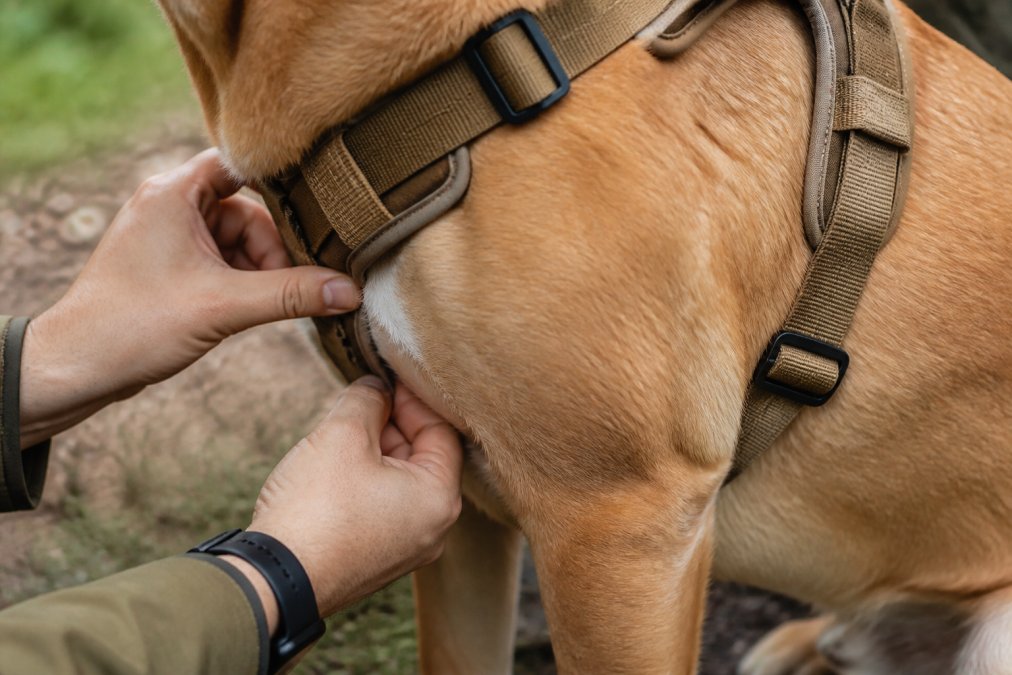
The two-finger rule: After fastening the harness, slide two fingers between the gear and your dog's body. You should fit them comfortably without forcing. If you can't fit two fingers, it's too tight. If you can fit more than three, it's too loose.
Check the chest strap: This strap should sit flat across the front of the chest, not dig into the armpits. If it pulls inward toward the armpit, loosen it slightly. The strap should rest on bone and muscle, not soft tissue.
Adjust the girth strap: This wraps around the belly. It should be snug enough that the harness doesn't slip during movement, but loose enough that your dog can breathe deeply and move their back legs freely. A common mistake is cinching it too tight to prevent slipping. That creates rubbing. Instead, adjust the chest strap first, then tighten the girth just enough for security.
Test the fit in motion: Have your dog walk, trot, and run a short distance.
Addressing Dog Harness Rubbing Armpits
Armpit chafing is the most common complaint from active dog owners. The armpits are thin-skinned, sensitive areas with less fur protection. A harness that rubs there causes pain fast.
Choosing a Heavy Duty Dog Hiking Harness
For serious outdoor work, you need a harness built to last. A heavy duty dog hiking harness handles rough terrain, long hours, and repeated washing without falling apart.
Materials That Reduce Friction
Fabric choice matters more than most people realize. Stiff, synthetic materials create friction. Smooth, breathable fabrics reduce it.
Best materials for outdoor harnesses:
- Breathable mesh, Promotes airflow, prevents moisture buildup, stays cool during runs and hikes
- Quick-dry fabric, Sheds water and mud easily, dries fast after swimming or rain
- Nylon webbing, Durable, lightweight, and smooth against fur
- Moisture-wicking construction, Pulls sweat away from skin, reducing chafing risk
Padding and Comfort Features
Padding in high-contact areas absorbs impact and reduces pressure concentration. The best padding is thin and firm, not thick and squishy. Thick padding shifts during movement and creates new pressure points.
Preventing Harness Mats in Dogs
Matting happens when fur gets compressed under a harness for hours, then dries in that compressed state. The undercoat tangles, and you're left with mats that pull when you try to brush them out.
Before each outdoor session:
- Brush your dog's coat thoroughly, paying special attention to areas the harness will cover
- Remove any existing mats or tangles
- Check that the undercoat is dry and fluffed up
During activity:
- Take breaks every 1-2 hours to remove the harness and let fur fluff back up
- On hot days, remove the harness more frequently to prevent sweat buildup
After activity:
- Remove the harness immediately when you get home
- Gently brush the areas that were covered while the fur is still warm
- Let those areas air dry completely before putting the harness back on
Post-Activity Skin Inspection and Care
After every outdoor session, inspect your dog's skin where the harness sat. This takes two minutes and catches problems before they become serious.
What to check:
- Red areas, Light pinkness is normal. Deep red or purple means pressure was too high
- Hair loss, A few loose hairs are normal. Bald patches mean chafing happened
- Raw skin, Any open sores need immediate treatment
- Swelling, Puffy skin under the harness indicates inflammation
If you find minor irritation:
- Stop using that harness for 3-5 days
- Apply a soothing balm designed for dogs (avoid human products)
- Keep the area clean and dry
- Check daily for improvement
If you find raw skin or open sores:
- Remove the harness immediately and don't use it until the skin heals completely
- Consult your veterinarian if the irritation doesn't improve within a week
- Consider a different harness style when you resume outdoor activities
Using Protective Layers and Barrier Methods
Sometimes, even a well-fitted harness needs extra protection. Protective layers create a buffer between the gear and your dog's skin.
Dog clothing as a barrier:
Protective balms:
Neoprene padding strips:
When to use barriers:
- Your dog has sensitive skin or a history of chafing
- You're doing an extended activity (8+ hours of hiking)
- Your dog has a thin coat or less fur in vulnerable areas
- You're breaking in a new harness and want to play it safe
Maintaining Your Harness to Prevent Chafing
A clean, well-maintained harness performs better and lasts longer. Dirt, sweat, and mud buildup create rough spots that increase friction.
After each outdoor session:
- Rinse the harness with cool water to remove mud and debris
- Use a soft brush to scrub away dried dirt
- Let it air dry completely in a shaded area (avoid direct sunlight, which can degrade fabric)
Weekly deep cleaning:
- Hand wash with mild soap and cool water
- Gently scrub all seams and straps where dirt hides
- Rinse thoroughly until no soap remains
- Air dry completely before storing
Monthly inspection:
- Check all stitching for wear or fraying
- Inspect buckles and D-rings for rust or damage
- Look for areas where fabric is thinning or pilling
- Replace any damaged components before they cause problems
Storage:
- Store in a cool, dry place away from direct sunlight
- Don't fold the harness in the same creases repeatedly, this weakens fabric
- Keep it away from heat sources and moisture
Frequently Asked Questions
How do I know if my dog's harness is causing chafing?
Check for raw skin, hair loss, or redness in areas where the harness contacts your dog's body, especially around the armpits, chest, and girth straps. Matting of the undercoat beneath the harness is another early warning sign. Inspect your dog's skin immediately after outdoor activities and again the next morning. If you notice any irritation, stop using that harness and switch to one with better padding or a different fit. Early detection prevents minor friction from becoming serious raw skin or hot spots.
What's the best way to fit a dog harness correctly?
Measure your dog's chest and girth before purchasing. Once fitted, the harness should sit snugly without restricting movement or breathing. You should be able to fit two fingers between the harness and your dog's skin. The chest strap should sit flat across the front without twisting, and the girth strap must not ride into the armpits. Adjust all straps evenly, a loose girth strap combined with a tight chest strap causes the harness to slip into pressure points. Check the fit regularly, especially on growing dogs or after weight changes.
Can I use a shirt under my dog's harness to prevent chafing?
Yes, a thin, moisture-wicking shirt or protective layer can reduce friction between the harness and your dog's coat. This works especially well for dogs prone to matting or those with sensitive skin. Choose breathable fabric that won't trap heat during active outdoor use. However, this is a supplementary solution, proper harness fit and quality materials remain the primary defense against chafing. The shirt should fit snugly so it doesn't bunch up under the harness straps.
Why does my dog's harness rub in the armpits?
Armpit rubbing typically occurs when the girth strap is too loose or the chest strap is too tight, causing the harness to slip downward into the underarm area. Poor harness design, particularly those with a horizontal strap across the front of the chest, can also contribute to this issue. Breed-specific anatomy matters too; dogs with narrow chests or deep armpits are more prone to this problem. Fix it by tightening the girth strap first, then adjusting the chest strap for balance. If the design itself causes problems, switch to a harness with a different strap configuration or consider one with extra padding in that area.