


How to Choose a Dog Bed for Camping: 7-Step Guide
Table of Contents
- Start With Your Dog: Size, Weight, and Sleeping Style
- Pick a Portable Dog Bed for Camping You Can Actually Carry
- When an Elevated Dog Bed for Camping Makes Sense
- Why an Insulated Dog Bed for Camping Beats a Thin Mat
- Weather Protection: Waterproof Fabric, Seams, and Fasteners
- How to Clean a Dog Bed After Camping
- Campsite Safety and a Practical Selection Checklist
- Conclusion
- Frequently Asked Questions
Last Updated: October 20, 2026
Start With Your Dog: Size, Weight, and Sleeping Style
Nearly 70% of dog owners let their dogs sleep in bed with them each night, according to Canisius University's study on canine bed privileges. So the first step in how to choose a dog bed for camping is simple: know your dog before you shop.
A dog bed for camping is a portable sleep surface built to keep your dog off cold, wet ground while packing small enough to travel. Fit comes first. Everything else follows.
Measure Nose-to-Tail and Add Blanket Space
Measure your dog from nose to tail while they lie stretched out. Then add 4 to 6 inches of blanket space on each side. A bed that's too small forces your dog to curl tight all night. A bed that's too big wastes pack space.
Match Bed Shape to How Your Dog Sleeps
Watch your dog for one evening and note the pattern:
- Sprawlers stretch flat and need a rectangular or square bed
- Curler dogs tuck into a ball and do fine in a round bed with raised edges
- Leaners press against a wall or your leg, so raised edges help
- Puppies grow fast, so size up rather than buying twice
Pick a Portable Dog Bed for Camping You Can Actually Carry
The best portable dog bed for camping is one that fits in your pack without eating it alive.
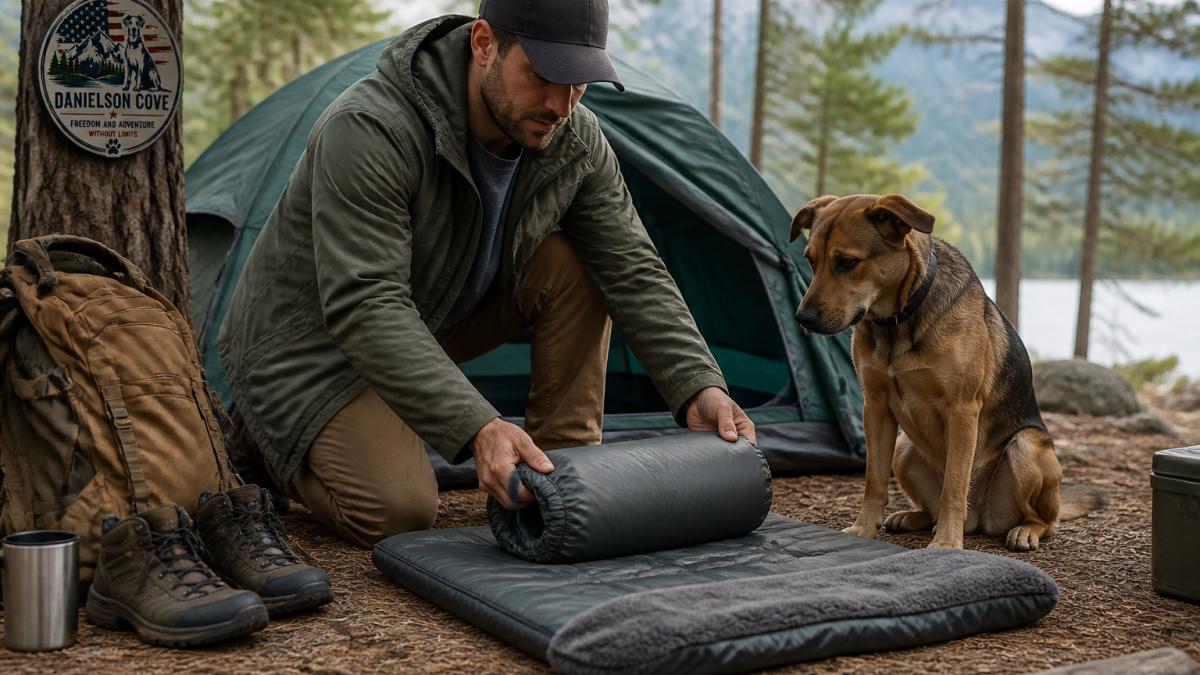
Our Travel Bed packs down to 14" × 6" × 6" and sets up in seconds, with no inflation step.

Here's the trade-off most guides skip: thick foam sleeps better but packs worse. If you're hiking in more than a mile, a thin mat wins.
When an Elevated Dog Bed for Camping Makes Sense
An elevated dog bed for camping lifts your dog off the ground on a cot-style frame. It shines in warm, dry weather and on hard or rocky ground, where a thin mat would bottom out on stones.
The catch is bulk and insulation. Frames take up more room in the vehicle and add weight you feel on any real approach.
The Mechanism: Airflow Cuts Both Ways
An elevated cot works by convection. Air moving under the sleeping surface carries heat away from the dog. On a hot day that's exactly what you want. On a cold night it's the opposite of what an insulated mat does, which is trap a layer of still air and block conduction from cold ground. That's why an elevated bed and an insulated mat solve different problems rather than competing.
Choose Elevated When:
- Summer trips dominate your calendar and daytime heat is the main concern
- Your campsite has hard-packed, rocky, or uneven ground where a mat would bottom out
- You have vehicle space and don't need to carry the bed far from the car
- Your dog runs hot or seeks airflow on warm afternoons
- You want a bed that dries quickly after rain or a swim
Skip Elevated When:
- Nights run cold or you camp in shoulder seasons, the airflow works against you
- You're packing light or hiking in more than a short distance
- Your dog is older, joint-sensitive, or a leaner who wants a raised edge to press against; most cots have no bolster
- Ground is soft, sandy, or muddy, where cot legs can sink or shift
A Practical Compromise
If your trips span hot days and cold nights, pair an elevated cot with a thin insulated mat laid on top after sundown. The cot keeps the dog off rocky ground and moving air cools the afternoon; the mat adds the insulation the frame can't provide at night. It's two pieces of gear, but each earns its place across a full season.
Why an Insulated Dog Bed for Camping Beats a Thin Mat
Ground steals heat fast. A Treeline Review evaluation of camping dog beds tested beds for comfort, support, durability, packability, cleaning, and weather resistance across dogs of different sizes, which shows how many factors one bed has to carry.
Our Thickened Moisture-Proof Camping Mat ($33.30) is built for exactly this. It adds cushioning and blocks ground moisture, and it wipes clean with a damp cloth.

For shoulder seasons, the Double-sided All-Season Dog Bed ($97.92) flips between a cooling side and an insulated side. That one bed covers July heat and October frost.
Weather Protection: Waterproof Fabric, Seams, and Fasteners
Waterproof fabric is only half the story. Seams and fasteners decide whether a bed survives real weather. K9 Sport Sack's outdoor dog bed guidance recommends water-resistant fabric that won't soak up rain, morning dew, or muddy paw prints, and notes that some beds include a waterproof base.
Thickened Moisture-Proof Camping Mat →
Check these points before you buy:
- Fabric: water-resistant coating beats bare polyester
- Base: a reinforced, waterproof bottom protects against wet ground
- Seams: tight, taped seams resist wicking
- Fasteners: metal hardware outlasts plastic snaps
- Covers: removable, washable covers extend bed life
A bed that fails at the seams fails in the rain. That's where we'd spend the extra money.
How to Clean a Dog Bed After Camping
Learning how to clean a dog bed after camping protects both the fabric and your dog's skin. Dirt ground into seams breaks down coatings over time.
Follow this routine:
- Shake off loose dirt and pine needles outside
- Brush dried mud off with a stiff brush
- Wipe the surface with a damp cloth and mild soap
- Rinse and air dry completely in shade
- Check seams and fasteners for wear before storing
Our Waterproof Portable Folding Mat ($90.60) is machine washable, which makes post-trip cleanup quick. The Travel Bed is spot clean only, so plan for a wipe-down rather than a wash cycle.

Campsite Safety and a Practical Selection Checklist
Campsite hazards damage beds and hurt dogs, and most bed guides skip them. Sharp rocks, hot ground, damp bedding, and chewing all shorten a bed's life and can send you home early. Treat the bed as part of your campsite setup, not an afterthought tossed in the tent.
Place the Bed Before You Unpack
- Off hot surfaces. Asphalt, dark rock, and metal truck beds absorb heat all day and can burn paw pads and degrade waterproof coatings. Set the bed in shade or on grass, and check the surface with the back of your hand first.
- Away from the fire ring and cooking area. Sparks, grease splatter, and dropped food all end up in bedding. Keep the bed at least a few paces from any open flame and out of the cooking zone.
- On level, cleared ground. Move sticks, pinecones, and sharp stones before you set down a mat or cot. A single buried rock under a thin mat is a pressure point all night.
- Out of runoff paths. Low spots collect dew, rain, and morning condensation. A bed that sits in a puddle wicks moisture upward even through a waterproof base.
Chew Resistance and Build Quality
A bored dog at camp chews. Look for these before you buy:
- Reinforced binding and bar-tacked stress points at corners and handle attachments, these are where beds fail first.
- Metal hardware over plastic snaps. Plastic buckles crack in cold weather and under load.
- No dangling straps or loose cord loops that invite chewing and can snag on brush.
- A base fabric with real abrasion resistance, a 600D or heavier weave resists rock and root damage far better than thin nylon.
If your dog is a determined chewer, supervise the bed for the first trip and remove it when you leave camp. No portable bed is chew-proof.
Dampness and Insulation Checks
- Lift the bed each morning and feel underneath. Trapped moisture means the ground is wicking or the base is failing.
- On cold nights, slide a closed-cell foam pad under the bed for extra ground insulation, the same pad you'd use under your own sleeping bag works well.
- Air the bed out in shade before stuffing it back in a sack. A damp bed packed away grows mildew and kills the coating.
Practical Selection Checklist
Work through this in order, trip conditions first, then the dog, then the build:
- Trip length and carry distance: backpacking favors a thin mat under 3 pounds; car camping allows a cushioned or elevated bed
- Expected ground temperature: cold or frozen ground needs insulation; hot ground needs airflow or shade
- Weather: water-resistant shell and waterproof base for wet trips
- Measured nose-to-tail length plus 4-6 inches of blanket space
- Shape matches sleeping style (sprawler, curler, leaner)
- Reinforced seams, metal fasteners, no loose straps
Bed Types Compared for Camping Conditions
| Bed Type | Best For | Packs Small | Insulation | Weather Resistance |
|---|---|---|---|---|
| Foam or folding mat | Backpacking, wet or cold ground | Yes | Moderate to high (with closed-cell base) | Good with waterproof base |
| Travel bed (ripstop) | Car camping, weekend trips | Yes | Light | Good |
| Elevated cot | Warm, dry weather; rocky or hard-packed ground | No | Low, air circulates below | Fair; frame offers little weather protection |
| Sleeping-bag-style bed | Cold nights, dogs that burrow | Moderate | High | Good with water-resistant shell |
| Portable cushion | Short trips, older or joint-sensitive dogs | Moderate | Moderate | Varies by cover |
Match the row to your actual trip, not to the most comfortable bed on the shelf. A high-insulation mat you'll happily carry beats a plush bed left in the car.
Conclusion
Picking the wrong bed means cold nights and a stiff dog by morning. Match the bed to your dog's size, sleep style, and the conditions you camp in, and the rest gets easy. Danielson Cove builds gear for exactly these trips: the Thickened Moisture-Proof Camping Mat for insulation, the Travel Bed for packable comfort, and the Double-sided All-Season Dog Bed for year-round range.
Frequently Asked Questions
What features should I look for in a dog bed for camping?
Prioritize a water-resistant or waterproof shell, reinforced seams, and a non-slip base. Look for a pad thick enough to block ground cold, a cover you can wipe or machine wash, and a packed size that fits your pack or vehicle. Match the bed's dimensions to your dog's nose-to-tail length plus a few inches of blanket space. A portable dog bed for camping that sets up without inflation saves time at camp and packs down small enough to carry on the trail.
How do I keep my dog warm on a camping bed at night?
Ground temperature drops faster than air temperature, so insulation matters more than cushion thickness alone. Choose an insulated dog bed for camping with a closed-cell foam or insulated layer, or add a moisture-proof mat underneath. Keep the bed off bare dirt and out of drafts, and bring a blanket your dog already uses at home. A double-sided bed with an insulated side for cool weather gives you a warm surface without hauling extra bedding.
How do I clean a dog bed after a camping trip?
Shake off loose dirt and pine needles first, then check the care label. Removable covers usually go in a cold gentle cycle and air dry; mats with a waterproof backing often just need a damp cloth wipe. Never put insulated or waterproof fabrics in a hot dryer, since heat can break down the coating. Air dry completely in the sun before storing, and spot clean mud while it is still damp so it does not set into the fabric.
Is an elevated dog bed better than a mat for camping?
It depends on the campsite and the dog. An elevated dog bed for camping lifts your dog off damp ground and allows airflow underneath, which helps in warm weather and on wet grass. It is bulkier to pack and offers less insulation in cold conditions. A flat insulated mat packs smaller and holds warmth better on cold nights. Many campers carry a mat for sleeping and use an elevated bed only for daytime lounging at base camp.