


How to Choose Durable Dog Treats for Outdoor Training
Last Updated: November 2, 2026
Quick Summary
The best durable dog treats for outdoor training hold their shape in a pocket, resist softening in heat, and survive a full session. Choose a texture that matches the moment: soft treats for fast rewards, crunchy or baked for one-handed work, and firm chews for break time. Carry treats in a sealed reserve and keep the pouch small to protect freshness.
- Check packaging for a resealable pouch or sealed container, since moisture is the main enemy of field treats.
- Soft treats give the fastest rewards but smear, clump and soften in warm weather.
- Carry two textures: a fast reward for high-repetition work and a firmer piece for sustained tasks.
- Keep the working pouch small and the reserve bag sealed in your pack to limit moisture exposure.
- Test a treat by leaving it in a warm car for an hour before trusting it on a trail.
Table of Contents
- Why Durable Dog Treats Matter on Outdoor Training Days
- What Makes a Dog Treat Durable Enough for the Trail
- Soft, Chewy, or Crunchy: Choosing a Texture for Outdoor Work
- Treat Size and Reward Value by Training Stage
- Choosing a Dog Treat Pouch for Outdoor Training
- How to Keep Dog Treats Fresh Outdoors
- Building Your Outdoor Training Treat Kit Before Your Next Trip
- Frequently Asked Questions
Why Durable Dog Treats Matter on Outdoor Training Days
Outdoor training is where a reward either works or quietly falls apart. A treat that crumbles in your pocket, melts in a warm car, or leaves a greasy mess on the trail stops being a reward and becomes a distraction. Durable dog treats for rewarding outdoor training solve that problem by holding their shape, staying clean, and lasting through a full session.
Training outside is harder than training in the living room. Distractions multiply: squirrels, other dogs, new smells, and wind. A dog that will sit happily for a kibble at home may need a stronger, more interesting reward when a rabbit runs past. That is why many trainers keep a dedicated pouch of treats for field work, separate from everyday feeding.
Whether you are walking a trail or working a field, the reward you carry should be as dependable as the rest of your kit.
What Makes a Dog Treat Durable Enough for the Trail
Durability comes down to a few measurable traits. Look for treats that resist crumbling when handled, hold up in a pocket for hours, and do not soften quickly in heat or humidity.
Check the packaging for a resealable pouch or sealed container, because moisture is the main enemy of field treats. For a closer look at chews that hold up to heavy chewing, see durable chew options for heavy chewers.
Our Water Buffalo Horn Core Dog Chews, Large 2-Pack, are a firm, long-lasting chew option. The chew is made from water buffalo horn core, the inner part extracted by steaming water buffalo horns, and the supplier lists no additives, preservatives, or artificial flavors.

Keep in mind that a chew built for longevity suits longer breaks, not rapid-fire rewards. Pair it with smaller treats for active recall work.
Soft, Chewy, or Crunchy: Choosing a Texture for Outdoor Work
Texture is the single biggest predictor of how a treat behaves once you leave the house. The same treat that works beautifully in a kitchen can turn into a sticky mess in a hip pouch on a humid morning, or shatter into dust after a cold snap.
Soft and semi-moist treats. These are the fastest rewards, most dogs swallow a pea-sized piece in under two seconds, which keeps the rhythm of a recall drill intact. The field cost is residue. Soft treats smear on fingers, coat the inside of a pouch, and transfer odor to your hands, which matters when you are handling a leash, a clicker, and a water bottle with the same hand.
Crunchy and baked treats. These hold their shape in a pouch and are easy to grab one-handed, which is why many handlers default to them for loose-leash work and stationary exercises. The trade-off is speed: a dog that has to crunch takes longer to reset, and crumbs accumulate at the bottom of the pouch.
Hard, dense chews. These are not rapid-fire rewards, they are break-time rewards. A dense chew gives a dog a sustained project during a rest stop, which is useful on longer outings when you want the dog settled rather than scanning for the next distraction.
Air-dried and freeze-dried pieces. These sit in a useful middle ground: firm enough to survive pocket storage, light enough to break into smaller pieces on the trail, and generally lower in surface grease than soft treats. A common pattern among handlers is to carry freeze-dried pieces as the "high-value" reward and a firmer baked or air-dried treat as the volume reward.
A practical field test before you commit a treat to your kit: put a handful in a sealed bag, leave it in a warm car for an hour, then handle it with one hand while wearing a leash glove. If it smears, clumps, or crumbles into unusable dust, it is a kitchen treat, not a trail treat.
Many handlers carry two textures rather than choosing one: a fast soft or freeze-dried reward for high-repetition work, and a firmer piece for sustained tasks and breaks. Matching texture to the moment is more useful than picking a single "best" texture for all outdoor training.
Each texture behaves differently once you leave the house, so match the treat to the moment.
| Texture | Best use outdoors | Main field trade-off |
|---|---|---|
| Soft and semi-moist | Short-session rapid rewards | Smears, clumps and softens in heat |
| Crunchy and baked | One-handed loose-leash and stationary work | Slower to reset; crumbs collect in pouch |
| Hard, dense chews | Break-time rewards during rest stops | Adds weight and bulk to the pouch |
| Air-dried and freeze-dried | High-value reward or lighter volume reward | Generally less surface grease than soft treats |
Treat Size and Reward Value by Training Stage
Reward value depends on how much the dog wants the treat, not just how big it is. Early in training, when you are teaching new behaviors in a low-distraction setting, small, easy-to-chew pieces keep the pace up. As the dog learns, you can raise the difficulty and use higher-value rewards for the harder outdoor work.
For puppies, keep treats very small and count the day's total, since overfeeding is easy during long outings. Adult dogs can handle larger pieces, but portion control still matters. Break bigger rewards into smaller pieces so the dog gets frequent reinforcement without extra calories piling up.
A practical approach is to match treat size to the distraction level. Quiet trail moments can use a larger, longer-lasting treat. Busy environments call for quick, small rewards delivered often.
Water Buffalo Horn Core Dog Chews, Large 2-Pack →
Choosing a Dog Treat Pouch for Outdoor Training
A good pouch keeps treats accessible with one hand, protects them from moisture, and stays closed when you are moving. Look for a pouch with a secure closure, a wipeable or water-resistant exterior, and enough compartments to separate treat types.
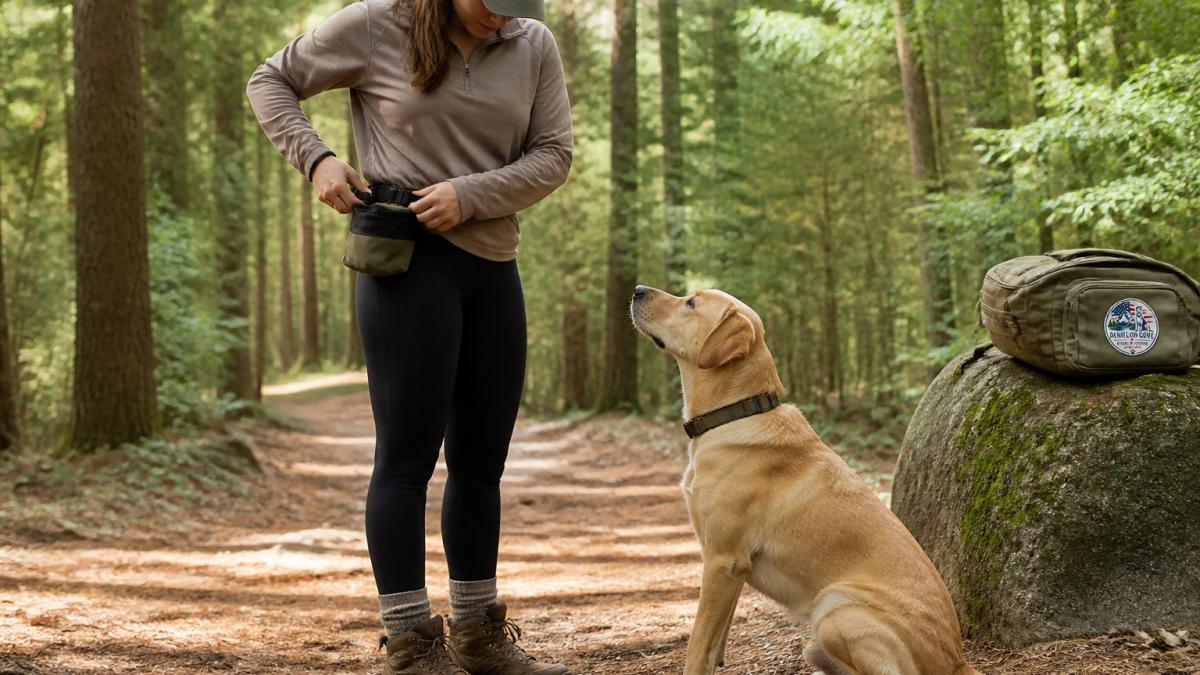
Clip-on pouches that sit at the hip keep your hands free for leash handling. Pouches with a lid or drawstring protect against debris on the trail. Avoid open-top bags, which spill treats and let dust and moisture in.
Size the pouch to your sessions. A small pouch holds enough for a short walk. For longer outings, choose one with more capacity or bring a spare container in your pack.
How to Keep Dog Treats Fresh Outdoors
Freshness outdoors is a moisture and temperature problem, and most training-treat articles skip it entirely.
Start with the right container at home. Airtight containers keep ambient humidity away from treats between outings. For soft and semi-moist treats, a sealed container plus a cool, dark shelf is enough for normal use. For freeze-dried and air-dried treats, the main enemy is crushing and moisture pickup, so a rigid container beats a soft bag.
Separate the working supply from the reserve. The single most useful outdoor habit is to carry two containers: a small pouch you open repeatedly during the session, and a sealed reserve bag in your pack. The pouch is exposed to air, hands, and weather every time you reach in; the reserve stays sealed until you refill. This keeps most of your supply out of the moisture cycle.
Watch temperature, not just time. Heat accelerates spoilage and softens treats, and a closed vehicle on a warm day can reach temperatures well above ambient within an hour. Treats left in a hot car can spoil faster than the packaging suggests, even if they looked fine when packed.
Handle wet treats correctly. If treats get rained on or dropped in a stream, do not return them to the sealed reserve. Spread them out to dry completely before repacking, and discard any that smell sour, feel slimy, or show visible mold. Soft treats that have been wet and rewarmed are the highest-risk category.
Match supply to session length. A short walk needs only a small pouch refill. A full-day outing needs a reserve bag sized to the number of rewards you actually expect to deliver, most handlers overpack treats and end up carrying the excess in a warm pack all day.
Hydration is part of the freshness plan. A dog that is working hard outdoors needs water, and carrying it makes hydration stops predictable rather than dependent on finding a clean source.
A simple rule that holds up across conditions: keep the reserve sealed, keep the pouch small, keep both out of direct heat, and discard anything that has been wet and rewarmed. That workflow does more for treat freshness outdoors than any single product choice.
Building Your Outdoor Training Treat Kit Before Your Next Trip
Plan your kit before the trip, not at the trailhead. Browse a heavy-duty outdoor gear kits buying guide to see what bundles are available. Start with the reward types you expect to use: a few small soft treats for quick reinforcement, a handful of firmer pieces for sustained work, and one longer-lasting chew for downtime.
A simple checklist helps:
- Small, high-value treats for recall and distractions
- Firmer treats for longer training blocks
- A long-lasting chew for breaks, such as the Water Buffalo Horn Core Dog Chews
- A clip-on pouch with a secure closure
- A sealed backup container in your pack
- Water and a portable dispenser for hydration stops
Test the kit on a short local walk before a longer trip. Get your dog comfortable with gear by reading how to train your dog to wear a hiking harness. You will quickly learn which treats your dog responds to, which textures hold up, and how much your pouch can carry comfortably.
University of Lincoln study comparing remote electronic collars and reward-based dog training
Frequently Asked Questions
What kind of treats should I use for dog training?
Use small, soft treats your dog can swallow in a second or two, so the reward doesn't interrupt the exercise. Outdoors, pick treats that stay firm in a pocket or pouch and don't crumble into dust. Keep a higher-value treat for hard moments such as recall near distractions, and a lower-value everyday treat for routine work. Test a new treat at home before a trail day to confirm your dog will eat it with other smells and noise around.
Should training treats be soft or crunchy?
Soft treats are easier to break into tiny pieces and tend to be more motivating for many dogs, which helps during distraction-heavy outdoor sessions. Crunchy treats hold their shape better in a pouch and resist crumbling, which keeps mess down on the trail. Many handlers carry both: soft for focus work and firmer pieces for longer walks where the dog needs a steady stream of rewards without a sticky mess.
How small should dog training treats be?
Aim for pieces roughly the size of a pea or smaller, so each reward takes only a moment to eat and you can deliver many of them in one session. Large chunks fill your dog up quickly and slow the pace of training. Smaller pieces also make it easier to watch calorie intake, since a treat-heavy outing can add up quickly for a dog that is not used to extra food.
How do I keep dog training treats fresh outside?
Store treats in a sealed, moisture-resistant pouch or a resealable bag, and keep them out of direct sun and heat in the car or pack. Avoid carrying treats loose in pockets where lint and moisture build up. After a trip, check the treats for softness, odor or mold before the next outing, and discard anything that smells off. Keeping a small amount in the pouch and the rest sealed at home also limits exposure to air and humidity.
Danielson Cove builds gear for owners who take their dogs seriously on the trail, and we choose products we would carry ourselves. Start with one pouch, a few reliable treats, and a durable chew, then refine the kit after each outing. Your dog's next training session may be the best one yet.
