


How to Buy a Waterproof Tactical Dog Leash
Table of Contents
- What Makes a Waterproof Tactical Dog Leash Different
- Essential Materials and Durability Factors
- Choosing a Tactical Dog Leash with Traffic Handle
- Leash Length and Quick-Release Features
- How to Maintain Tactical Dog Gear
- Your Waterproof Tactical Dog Leash Buying Checklist
- Matching Leash Features to Your Dog and Activity
- Frequently Asked Questions
Last Updated: October 7, 2026
What Makes a Waterproof Tactical Dog Leash Different
A waterproof tactical dog leash is built for serious outdoor work and adventure, not casual neighborhood walks. The difference starts with materials and hardware designed to handle extreme conditions without degrading. When you're hiking muddy trails, working with a service dog, or exploring in wet weather, a standard leash absorbs water, retains odors, and fails under sustained pulling pressure. A tactical dog leash handles all three.

At Danielson Cove, we've built gear for people and dogs who demand reliability in unpredictable conditions. The tactical construction philosophy centers on control, durability, and performance.
Tactical construction versus standard leashes
Standard leashes prioritize comfort and aesthetics. Tactical leashes prioritize function and durability. The construction differences are substantial.
A tactical dog leash includes reinforced stitching at stress points, heavy-duty hardware rated for sustained pulling force, and materials chosen for performance in harsh environments. Traffic handles, short handles positioned near the collar, give you close control in tight situations. Quick-release carabiners let you detach instantly if needed. Reflective stitching ensures visibility in low light.
Standard leashes typically use lighter webbing, basic snap hooks, and minimal reinforcement. They're fine for a calm dog on a paved street. They'll fail on a 90-pound puller charging through brush, or in conditions where water and mud degrade materials.
Water-resistant versus waterproof materials
The New York Times Wirecutter evaluated six leashes with feedback from seven dogs and found that material choice dramatically impacts real-world performance. But water-resistant and waterproof are not the same thing.
Water-resistant materials slow water absorption but don't stop it completely. A water-resistant leash will eventually absorb moisture if exposed long enough. Waterproof materials use coatings or construction methods that block water entirely. Ray Allen's guide to K9 working dog equipment describes BioThane as polyester webbing with a PVC coating that resists water, dirt, and odors.
The distinction matters for maintenance and longevity. A water-resistant leash needs careful drying after wet use. A waterproof leash sheds water and dries quickly on its own. For serious use, waterproof is worth the investment.
Essential Materials and Durability Factors
Tactical dog gear fails or succeeds based on materials and construction. Understanding what to look for protects your investment and keeps your dog safe.
Webbing and rope construction
The core of any leash is its webbing or rope. Heavy-duty nylon webbing is the standard for tactical leashes. It resists fraying, handles sustained pulling, and won't degrade quickly under UV exposure or moisture.
Some tactical leashes use marine-grade rope construction instead of webbing. Rope offers superior flexibility and can absorb shock better than flat webbing. The trade-off is that rope requires more careful maintenance to prevent mildew and odor buildup.
Reinforced stitching at attachment points is non-negotiable. Stress points, where the leash connects to hardware, where handles attach, where webbing folds, fail first under load. Double or triple stitching at these points extends the leash's working life significantly. Check the stitching quality before buying.
Hardware and load capacity
The hardware on a tactical dog leash carries the actual load. A 90-pound dog pulling hard puts serious stress on clips, carabiners, and attachment rings.
Stainless steel hardware resists rust and corrosion better than standard steel or zinc-plated options. For waterproof tactical leashes, stainless steel is essential, it won't degrade when exposed to saltwater, chlorine, or constant moisture.
Quick-release carabiners should be rated for the weight they'll carry. A leash for a large dog needs hardware rated for at least 150-200 pounds of force. Check the product specifications. Undersized hardware fails under load, sometimes catastrophically.
Attachment rings and D-rings should be welded or riveted, not just crimped. A crimped ring can separate under sustained pressure.
Choosing a Tactical Dog Leash with Traffic Handle
A traffic handle is a short handle positioned 12-18 inches from the collar attachment point. For serious outdoor work, it's one of the most valuable features you can have.
Why traffic handles matter for control
A traffic handle gives you close control in situations where a standard leash length creates distance and use problems. Imagine a crowded trailhead, a parking lot, or any moment where your dog needs to be right next to you immediately.
Without a traffic handle, you're gripping the main leash body, which is awkward and gives your dog use to pull. With a traffic handle, you have a dedicated grip point designed for close work.
For large dogs and heavy pullers, this control matters. It's the difference between managing a situation and losing control of it. Police K9 handlers use traffic handles for exactly this reason, they need instant, reliable control in unpredictable environments.
Padded grip and handle comfort
A padded handle reduces hand fatigue and prevents rope burn during extended use. Materials matter here too. Neoprene padding is common and effective. It provides cushioning without absorbing water, and it dries quickly.
The handle should be wide enough to grip comfortably but not so wide that it's awkward to hold. A handle 1.5 to 2 inches wide is typical and works for most hand sizes.
Some tactical leashes include rubberized or textured grips instead of padding. These work well too, especially in wet conditions where padding might slip. The key is that your grip doesn't slip, your hand doesn't fatigue, and the handle doesn't absorb water and odors.
Leash Length and Quick-Release Features
The right length depends entirely on your activity and your dog's size and training level.
Finding the right length for your activity
A 4-foot leash keeps your dog close. It's ideal for crowded areas, training, and situations where you need immediate control. For hiking with a well-trained dog, it's restrictive.
A 6-foot leash is the standard compromise. It gives your dog some freedom to explore while keeping them close enough to control. Most tactical leashes come in 6-foot lengths.
An 8-foot leash works for open areas and dogs that have solid recall. It lets your dog range further while staying connected. On narrow trails or in crowds, it becomes a liability.
For beach days and water-heavy activities, shorter is often better. An 8-foot leash dragging through sand and water gets heavy and unwieldy. A 4 or 6-foot leash is easier to manage.
High Elasticity Glow-in-the-Dark Dog Leash →
Quick-release carabiners and attachment points
A quick-release carabiner lets you detach your dog instantly if needed. This matters if your dog gets tangled, if you need to let them go for their safety, or if you're transitioning between leash and off-leash areas.
The carabiner should open smoothly but not accidentally. A gate that's too loose will pop open under load. A gate that's too stiff is frustrating to operate under pressure. Test the action before buying.
Look for carabiners rated for climbing or tactical use, not just generic camping carabiners. These are engineered to handle sustained load and repeated use. The rating should exceed your dog's weight by a significant margin, at least 2-3 times the load.
How to Maintain Tactical Dog Gear
A tactical dog leash is an investment. Proper maintenance extends its life and keeps it performing reliably.
Cleaning and drying procedures
After muddy or sandy outings, rinse the leash thoroughly with fresh water. Use mild soap and a soft brush to remove stubborn dirt.
Air dry completely before storing. Lay the leash flat or hang it in a well-ventilated space. Don't coil it wet, moisture trapped inside promotes mildew and odor. In humid climates, this matters more.
For waterproof leashes with PVC coatings, avoid direct sunlight during extended drying. UV exposure can degrade the coating over time. Dry in shade when possible.
Machine washing is sometimes acceptable for nylon webbing leashes, but hand washing is safer. Use a gentle cycle with cool water if you machine wash. Air dry afterward.
Inspecting for wear and extending lifespan
Check your leash regularly for signs of damage. Look for fraying webbing, loose stitching, rust on hardware, or cracks in PVC coatings. Catch problems early before they become safety issues.
Pay special attention to stress points: handle attachments, hardware connections, and areas where the leash folds or bends repeatedly. These wear first.
If you spot loose stitching, reinforce it with thread and needle before it spreads. A small repair now prevents a larger failure later.
Store your leash in a cool, dry place. Avoid leaving it in direct sunlight for extended periods. UV exposure degrades materials over time, especially PVC coatings and elastic components.
Your Waterproof Tactical Dog Leash Buying Checklist
Use this checklist when evaluating a waterproof tactical dog leash:
- Material is explicitly waterproof (not just water-resistant)
- Hardware is stainless steel or corrosion-resistant
- Stitching is reinforced at stress points (double or triple stitching visible)
- Traffic handle is present and well-padded
- Quick-release carabiner opens smoothly and is rated for your dog's weight
- Leash length matches your primary activity (4, 6, or 8 feet)
- Handle is comfortable to grip and doesn't absorb water
- Product reviews mention durability in wet conditions
- Care instructions are clear and maintenance is manageable
- Price reflects the quality and construction (not the cheapest option available)
Matching Leash Features to Your Dog and Activity
The best leash for a small dog won't work for a large dog. The best leash for neighborhood walks won't perform on backcountry trails. Match the leash to your specific situation.
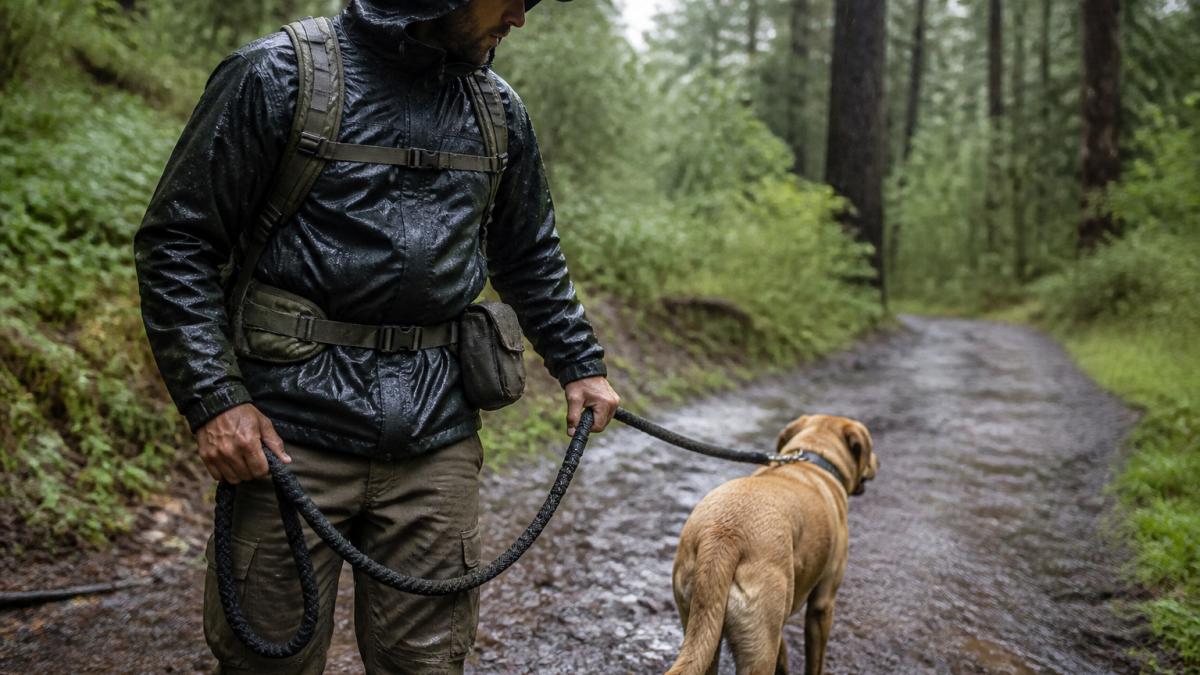
Large dogs and heavy pullers
A large dog pulling hard needs a leash engineered for sustained force. This means heavy-duty webbing, reinforced stitching, and hardware rated for 150+ pounds of pulling force.
A 6-foot leash is usually ideal for large dogs. It's long enough for some freedom but short enough to maintain control. A 4-foot leash can feel restrictive for a large dog that's well-trained.
The traffic handle becomes more valuable with large dogs. When your 80-pound dog decides to investigate something, that close control point is what lets you redirect them safely.
For large dogs, waterproof construction is especially important. A big dog generates more mud, splashes through more water, and puts more stress on materials.
Water-heavy activities and beach days
If you're doing beach walks, water hikes, or any activity where your dog spends significant time wet, waterproof is non-negotiable.
A shorter leash works better in water.
Quick-drying materials matter here. PVC-coated webbing dries much faster than standard nylon.
Reflective stitching is valuable for water activities where visibility matters.
Consider the High Elasticity Glow-in-the-Dark Dog Leash from Danielson Cove, which combines waterproof construction with high-visibility reflective properties.

Choosing the right waterproof tactical dog leash means matching materials, hardware, and features to your dog's size and your activity level.
At Danielson Cove, we understand that service-oriented professionals and serious outdoor enthusiasts deserve gear that performs as reliably as they do.
Frequently Asked Questions
What makes a dog leash tactical?
A tactical dog leash combines heavy-duty construction with control-oriented features designed for active outdoor use. Tactical leashes typically include reinforced stitching, durable webbing or rope materials, traffic handles for close control, quick-release hardware, and hardware rated for high load capacity. These features make them suitable for backcountry hiking and managing large, strong dogs in challenging environments.
Why choose a waterproof tactical dog leash?
Waterproof leashes resist water absorption, which prevents odor buildup, mildew, and material degradation after wet-weather use. A waterproof tactical dog leash maintains its strength and durability through repeated exposure to rain, streams, and mud without requiring constant deep cleaning. This is especially important for regular beach days where moisture exposure is unavoidable and gear reliability is essential.
How do I clean a waterproof tactical dog leash?
Rinse the leash with fresh water and mild soap to remove mud and salt. For tactical dog gear with PVC-coated or marine-grade materials, hand wash gently and air dry completely in a well-ventilated area before storage. Inspect stitching and hardware during drying for signs of wear. Avoid direct sunlight during extended storage, and check attachment points regularly, especially after heavy use on rough terrain.
What is the benefit of a traffic handle on a tactical leash?
A traffic handle, a second grip point located 12-18 inches from the collar attachment, gives you close control when navigating crowded areas, crossing roads, or managing a dog near hazards. This feature is especially valuable for large dogs and heavy pullers, allowing you to shorten your effective leash length instantly without unhooking or rewinding.