


Natural Alternatives to Harsh Gear Cleaners
Table of Contents
- Why Natural Gear Cleaners Beat Harsh Chemicals
- Natural Alternatives to Harsh Gear Cleaners: The Core Ingredients
- How to Clean a Dog Harness Without Damaging Hardware or Webbing
- Cleaning Waterproof Dog Gear: What Works Without Stripping Coatings
- Remove Odor From Dog Harness: Vinegar Soaks and Baking Soda Treatments
- How to Dry a Dog Harness So It Lasts Another Season
- Mistakes That Ruin Gear and How to Avoid Them
- Conclusion: Clean Gear, Longer Adventures
- Frequently Asked Questions
Last Updated: October 12, 2026
Why Natural Gear Cleaners Beat Harsh Chemicals
Most gear cleaners promise a deep clean but don't advertise what they leave behind. Solvent-based degreasers can irritate skin and lungs and linger in webbing long after the rinse.
The U.S. Environmental Protection Agency has documented case studies on switching from solvent degreasing to aqueous, less-toxic cleaners, and the pattern holds: gentler formulas handle everyday grime well when you use them correctly.
This guide from Danielson Cove covers the core ingredients, the steps for harnesses and waterproof gear, and the mistakes that shorten gear life.
Natural Alternatives to Harsh Gear Cleaners: The Core Ingredients
Five household staples do most of the work: vinegar, baking soda, lemon juice, plant-based soap, and hydrogen peroxide. Each has a job it does well and at least one material it should never touch.
A 2022 study in the National Library of Medicine's PubMed Central looked at household use of green and homemade cleaning products and asthma, a reminder that "natural" is not automatically risk-free.
Vinegar, Baking Soda, and Lemon Juice
White vinegar is a mild acid that cuts light grease and neutralizes odor. Mix one part vinegar with three parts water for a general wipe-down.
Baking soda is a gentle abrasive that lifts dried mud and absorbs smell from webbing.
Lemon juice and salt make a scrub for rust spots and stains on metal hardware. Rinse well, since acid left on metal invites corrosion, and skip it on painted buckles and plated finishes.
Plant-Based Soap, Hydrogen Peroxide, and Essential Oils
Plant-based soap is the workhorse: a few drops in warm water removes grease and oil residue without stripping coatings.
Hydrogen peroxide handles mildew and tough organic stains. Use it diluted, never mixed with vinegar in the same container, and store it in an opaque bottle since light breaks it down.
Essential oils add scent and mild antibacterial action. Keep them away from your dog's nose and paws, and skip tea tree and citrus around pets.
What Each Ingredient Is Actually Good At
Natural cleaners are not solvents, and it helps to know the ceiling. Plant-based soap and warm water handle fresh mud, saliva, food grease, and body oils; vinegar handles odor and light film; baking soda handles dried mud and smell; hydrogen peroxide handles mildew and set-in organic stains. None will cut caked-on chain lube, heavy petroleum grease, or baked-on road tar, for that, a little dish soap and a stiff brush does more and still rinses clean.
Material Compatibility at a Glance
| Material | Safe Options | Avoid |
|---|---|---|
| Nylon and polyester webbing | Plant-based soap, diluted vinegar, baking soda | Bleach, hot water, prolonged soaking |
| Rubberized grips and padding | Plant-based soap, plain water | Vinegar, citrus, essential oils |
| Plastic buckles and hardware | Plant-based soap, damp cloth | Solvents, abrasive scrubs |
| Powder-coated or painted metal | Plant-based soap, damp cloth | Lemon juice, salt scrubs, vinegar soaks |
| Bare aluminum | Plant-based soap, plain water | Vinegar, lemon juice, salt |
| Stainless steel hardware | Plant-based soap, diluted vinegar, lemon juice (rinsed) | Prolonged acid contact |
| Waterproof coatings and DWR finishes | Neutral-pH plant-based soap, cool water | Detergents, solvents, hot water, fabric softener |
Combinations to Never Mix
- Vinegar and hydrogen peroxide in the same container. The mixture forms peracetic acid, which is irritating to skin, eyes, and lungs. Use one, rinse, then use the other if you must.
- Vinegar and baking soda. They neutralize each other on contact. You get fizz and water, not a stronger cleaner. Use them in sequence, not together.
- Bleach and vinegar, or bleach and ammonia. Both produce dangerous fumes. Skip bleach on gear entirely.
Safety Basics
Ventilate the space, wear gloves when working with vinegar or peroxide for more than a few minutes, and keep every container labeled and out of reach of pets and kids. Hydrogen peroxide is an oxidizer and should be stored away from heat. None of these ingredients is flammable on its own, but the solvents you're replacing often are.
How to Clean a Dog Harness Without Damaging Hardware or Webbing
Cleaning a dog harness takes about 15 minutes and three steps: brush off dry mud, wash with diluted soap, then rinse and air-dry fully. Skip the washing machine, which twists webbing and stresses stitching.
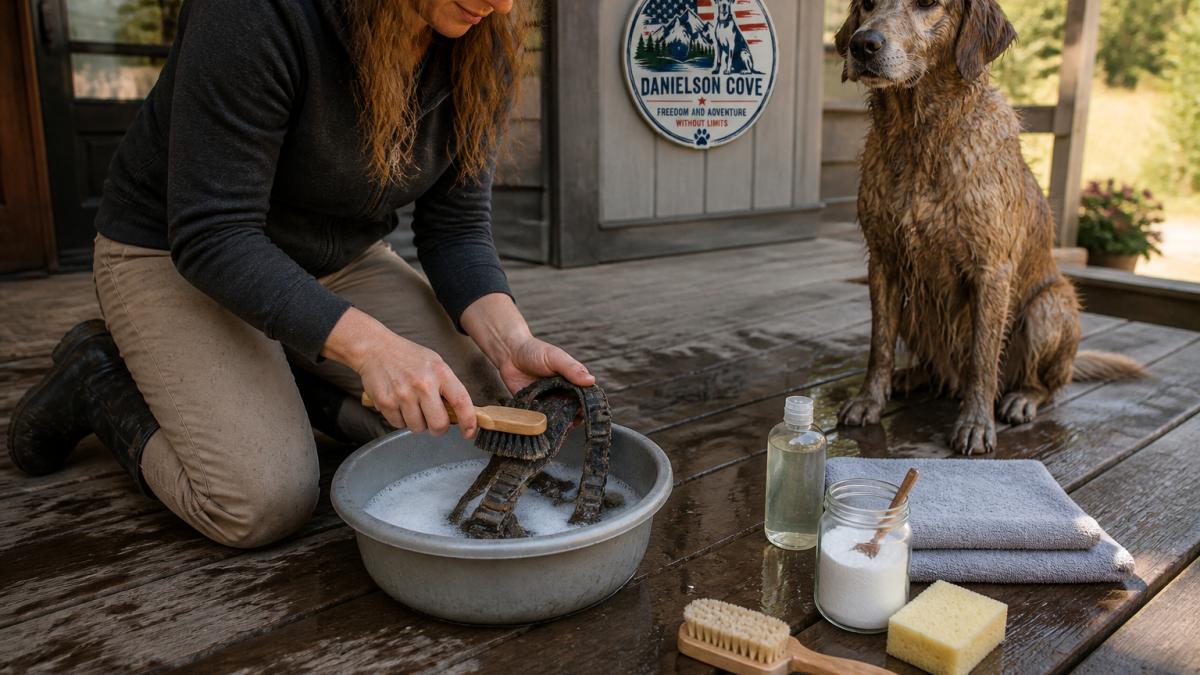
- Brush off dried mud with a stiff brush before it gets wet.
- Mix a few drops of plant-based soap in a bowl of warm water.
- Scrub webbing with a soft brush, working with the grain.
- Wipe metal hardware with a damp cloth, then dry it right away.
- Rinse under cool running water until it runs clear.
- Check every strap and stitch while it's wet.
A common mistake is soaking the whole harness overnight, that's how rust-prone snap hooks and cheap stitching fail. Our harnesses use corrosion-resistant hardware and reinforced stitching built for repeated washing.
Cleaning Waterproof Dog Gear: What Works Without Stripping Coatings
Cleaning waterproof dog gear means using the mildest cleaner that still lifts grime, because harsh detergents and solvents break down the durable water-repellent finish. Once that coating goes, water soaks in instead of beading off, and the fabric gets heavier, colder, and slower to dry.
Stick to these rules:
- Use cool or lukewarm water, never hot.
- Choose plant-based soap over degreasers or solvents.
- Skip bleach, fabric softener, and dryer sheets entirely.
A water-based cleaner with a neutral pH is the safest default. If the coating already looks flat, a wash-in or spray-on DWR treatment can restore beading after the gear is fully dry.
The Full Post-Cleaning Process
Most guides stop at "rinse and dry." That is where coatings actually fail. Work through these steps in order:
- Rinse twice. After the soap wash, rinse under cool running water, then rinse again to remove the surfactant film soap leaves behind. If the water still feels slick, keep rinsing.
- Wipe, don't wring. Press water out with a clean towel. Wringing stretches waterproof laminates and can delaminate the layers.
- Air-dry in shade. Hang the gear so air moves through every fold. Direct sun for long stretches degrades both the fabric and the DWR finish.
- Inspect while damp. Look for frayed stitching, cracked coating, stiff webbing, and any spot where water no longer beads. Catching these early is cheaper than replacing gear mid-season.
- Reactivate the DWR if needed. A spray-on or wash-in treatment restores beading. Follow the product's heat-setting directions, since many DWR treatments need a low tumble-dry or warm iron to bond. If the care label forbids heat, use a spray-on formula that air-cures.
- Re-lubricate hardware. Buckles, snaps, and any moving metal parts benefit from a drop of silicone-based lubricant after drying. Skip petroleum-based lubricants, which attract grit and can stain webbing.
- Store dry and loose. Never fold waterproof gear into a tight bundle while damp. Mildew starts in the folds and eats coatings from the inside.
When a Gentle Cleaner Isn't Enough
Natural cleaners have a real ceiling. They handle mud, dust, body oils, and light grease. They struggle with:
- Petroleum-based grease and chain lube. These need a dedicated degreaser or a small amount of dish soap and a stiff brush.
- Mildew that has stained the fabric. Hydrogen peroxide diluted with water can lift it, but the stain may remain even after the mildew is dead.
- Salt and road grime from winter use. A vinegar-and-water wipe helps, but rinse thoroughly so the acid doesn't sit on hardware.
When you hit one of these, use the stronger option, then finish with a neutral-pH rinse so no residue stays behind. The goal isn't to avoid every strong cleaner, it's to use the mildest one that works and rinse it out completely.
Residue, Runoff, and Disposal
Soap residue is the most common cause of gear that looks clean but feels tacky and attracts dirt within a day. Rinse until the water runs clear and slippery-free. Dump wash water on a lawn or gravel rather than a storm drain, since even plant-based soaps can affect aquatic life in concentrated amounts. Leftover vinegar and hydrogen peroxide can be diluted heavily and poured down a household drain.
Remove Odor From Dog Harness: Vinegar Soaks and Baking Soda Treatments
To remove odor from a dog harness, target the source: bacteria and oils trapped in the webbing.
Vinegar soak: Mix one part white vinegar with three parts cool water. Submerge the harness for 15 to 30 minutes, then rinse thoroughly.
Baking soda paste: Mix baking soda with a little water into a paste.
Never mask odor with perfume or essential oil sprays.
How to Dry a Dog Harness So It Lasts Another Season
Drying matters as much as washing: a damp harness grows mildew, and mildew eats webbing from the inside. Air-dry only, never in direct sun for long stretches.
Here's how to dry a dog harness so it stays in shape:
- Shake off excess water and blot with a towel.
- Hang it in a shaded, well-ventilated spot.
- Open every buckle and loosen the straps so air reaches the folds.
Most harnesses dry in a few hours in warm, moving air. In humid weather, point a fan at it. Store it fully dry, and never toss a damp harness into a gear bin.
Mistakes That Ruin Gear and How to Avoid Them
The fastest way to wreck good gear is a harsh cleaner applied the wrong way. Most damage isn't from wear. It's from cleaning.
| Mistake | What Happens | The Fix |
|---|---|---|
| Bleach or solvent cleaners | Coatings break down, colors fade | Use plant-based soap |
| Washing machine cycle | Twisted webbing, stressed stitching | Hand wash only |
| Soaking metal overnight | Rust and seized buckles | Wipe hardware, dry fast |
| Drying in full sun | Webbing gets brittle | Shade-dry |
| Mixing vinegar and peroxide | Irritating fumes | Use one at a time |
| Skipping the rinse | Sticky residue attracts dirt | Rinse until clear |
One more: don't clean gear right before a trip. Clean it after, so it dries fully and you spot damage while there's time to fix it.
Conclusion: Clean Gear, Longer Adventures
Gear that gets cleaned properly lasts longer, fits better, and stays comfortable on long days out. The ingredients are already in your kitchen, and the process takes minutes.
At Danielson Cove, we build gear for people and dogs who put it through real work. Our harnesses use corrosion-resistant hardware and reinforced stitching, and every purchase supports our commitment to donate 15% of profits to Daisy's Dane Sanctuary, a Great Dane rescue near Kansas City.
Add to cart and head out with gear that's ready for the next season.
Frequently Asked Questions
What can I use instead of harsh cleaners on dog gear?
White vinegar, baking soda, lemon juice, plant-based dish soap, and hydrogen peroxide handle most gear cleaning tasks. Mix vinegar with water for a general spray, use baking soda paste on grime, and add a few drops of plant-based soap for grease. These natural gear cleaners break down mud, sweat, and odor without leaving chemical residue on straps your dog licks or chews.
Can I clean a dog harness with mild soap and water?
Yes. A few drops of plant-based dish soap in warm water is one of the safest ways to clean a dog harness. Scrub webbing and straps with a soft brush, then rinse thoroughly until no suds remain. Soap residue left in the fabric attracts dirt and can irritate skin, so rinse longer than you think you need to. Avoid harsh detergents, bleach, and fabric softeners, which degrade nylon and metal hardware.
Is vinegar safe to use on waterproof dog gear?
Diluted white vinegar is safe for most waterproof dog gear, but keep it away from leather and never soak coated fabrics for long periods. Mix one part vinegar with three parts water, wipe the surface, and rinse with clean water. Vinegar removes odor and mild mildew without stripping most water-repellent finishes. Test a small hidden area first, since some older coatings react poorly to acids.
How often should I clean a dog hiking harness?
Rinse a dog hiking harness after every muddy or sweaty trip, and do a full wash every four to six weeks during active season. Monthly cleaning prevents salt, dirt, and oils from grinding into webbing and corroding hardware. If your dog swims often or the harness smells between washes, clean it more frequently. Regular rinsing is the single easiest habit for extending gear life.