


7 Steps to Safely Attach a GPS Tracker to a Tactical Collar
Last Updated: October 28, 2026
Quick Summary
To safely attach a GPS tracker to a tactical collar, measure the strap width and tracker footprint first, then choose a mounting method that matches your hardware and terrain. Weave pouches into MOLLE webbing with an over-under pattern, lock every strap, and tug-test before loading the device.
- Measure the collar strap width flat and compare it to the tracker's widest point before mounting.
- A fabric pouch suits small Bluetooth trackers, a hard bracket suits heavier GPS units.
- Weave pouch straps perpendicular to the webbing rows and start the second strap one row lower.
- Keep at least a finger's width of strap between the tracker and any metal hardware.
- Recheck strap tension after the first hour, since nylon stretches slightly when wet.
Table of Contents
- What You'll Need Before You Mount a Tracker
- Step 1: Measure Collar Width and Tracker Dimensions
- Step 2: Choose the Right Mounting Method for Your Tactical Collar
- Step 3: Use a Tactical Dog Collar GPS Pouch for Heavy Hardware
- Step 4: Position the Tracker for Weight Distribution and Comfort
- Step 5: Test the Fit While Your Dog Walks, Turns, and Shakes
- Step 6: Durable GPS Mounts for Working Dogs in the Field
- Step 7: Plan for Snags, Signal Interference, and Emergency Removal
- Frequently Asked Questions
What You'll Need Before You Mount a Tracker
A GPS tracker only works as well as the mount holding it. Get the hardware right and the fit survives brush, water, and a dog shaking off a creek crossing.
This guide from Danielson Cove walks through seven steps for attaching a GPS tracker to a tactical collar.
Here is what you need on the table before you start:
- Your GPS tracker and its charging cable
- The tactical collar you plan to use, with the D-ring visible
- A flexible tape measure or a strip of paper and a ruler
Check the No-Subscription Smart Pet Tracker to see the device dimensions and holder before you measure anything. Its silicone holder fits collars up to 0.95 inches wide, so that number is your first compatibility check.

Step 1: Measure Collar Width and Tracker Dimensions
Measure the collar strap width first, then the tracker's footprint, and write both numbers down.
Here is how to measure:
- Lay the collar flat on a table.
- Measure the strap width at the point where you plan to mount the device.
- Measure the tracker at its widest point, including any clip or button.
Our Nylon Tactical Dog Collar lists a collar width of 3.8 cm, which gives you a fixed reference point when you check a mount's specs. Measure your dog's neck before choosing a size.

Step 2: Choose the Right Mounting Method for Your Tactical Collar
Pick the mounting method based on how much hardware your tracker carries and how rough your terrain is. Our Tactical Dog Collar Stitching Guide explains how the collar is stitched and built so you can choose a mount that won't damage it. Three options cover most setups.
Pouch, Bracket, or Direct Strap Attachment
| Method | Best For | Trade-off |
|---|---|---|
| Fabric pouch | Small Bluetooth trackers | Less protection in deep water |
| Hard bracket | Heavier GPS units | Adds bulk to the strap |
| Direct strap attachment | Light trackers, quick swaps | No shock protection |
Step 3: Use a Tactical Dog Collar GPS Pouch for Heavy Hardware
A tactical dog collar GPS pouch is the right call when your tracker is bulky, expensive, or both. It spreads the device's weight across a wider patch of strap and keeps hardware off the dog's skin, but it is only as good as the webbing it rides on.
What to Look For in a Pouch
- Reinforced stitching at the strap channel and at every MOLLE loop
- A closed flap or zipper so the device cannot pop out on a hard shake
- MOLLE webbing compatibility if you want to reposition the pouch later
- A snug channel that matches your collar width (measure flat, as in Step 1)
- Drainage grommets or mesh so water does not pool against the device
- A low-profile back panel so the pouch does not rock on the strap
How to Weave a Tracker Pouch Into MOLLE Webbing
A reliable sequence for a tracker pouch:
- Align the pouch so its attachment straps sit perpendicular to the collar's webbing rows, not parallel to them.
- Start at the top row. Pass the pouch strap over the first webbing row, then under it, then over the next row, the classic over-under-over pattern.
- Alternate rows. If your pouch has two straps, weave the second strap starting one row lower so the two straps do not sit on the same row and create a pressure point.
- Snap or thread the strap back through its own buckle or loop. A strap that is only woven and not locked will walk itself loose within a mile of brush.
- Tug-test each strap before you load the tracker. If a strap slides, the weave is wrong, not the pouch.
Pouch vs. Bracket vs. Direct Strap on MOLLE
If you are building the collar side of the setup, our Tactical Dog Harness MOLLE System Vest shows a MOLLE webbing system.

Step 4: Position the Tracker for Weight Distribution and Comfort
Comfort matters for working dogs that wear the collar all day. If the device rubs, the dog will scratch at it, and a scratched collar is a loose collar.
No-Subscription Smart Pet Tracker →
Step 5: Test the Fit While Your Dog Walks, Turns, and Shakes
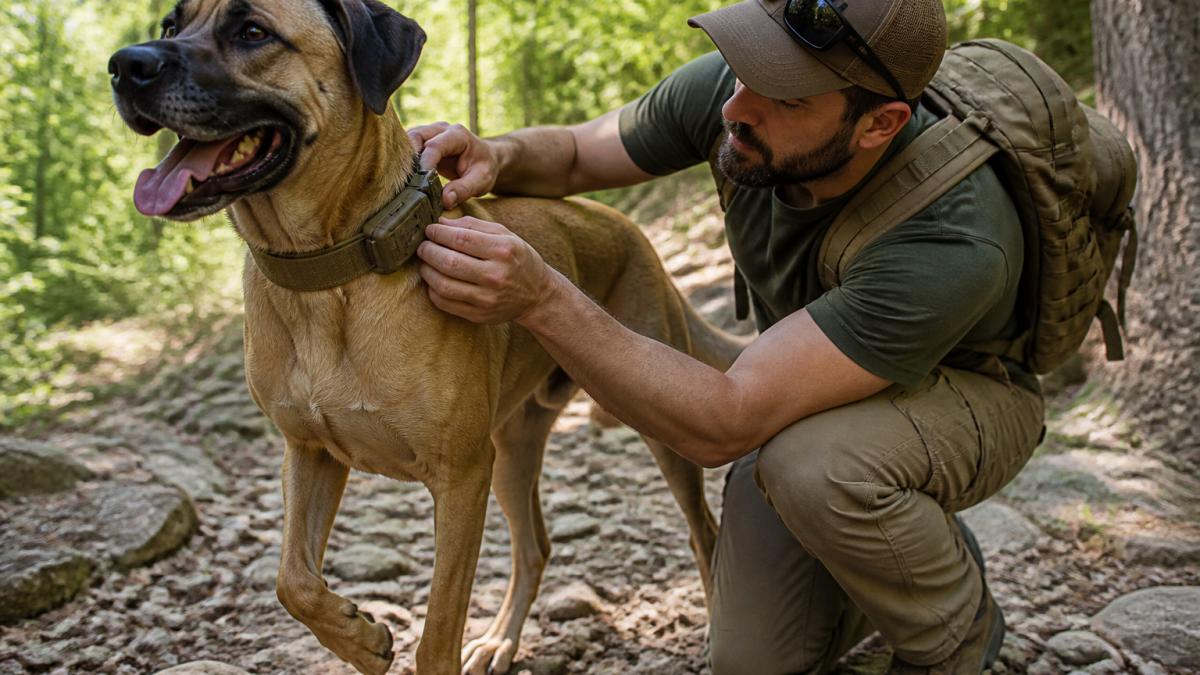
A collar-mount guide from HOSS Straps on GPS tracker collar mounts recommends exactly this approach: match the mount to the collar width and tracker type, then check the setup while the dog walks, turns, shakes, and lowers its head.
Step 6: Durable GPS Mounts for Working Dogs in the Field
Durable GPS mounts for working dogs must survive water, mud, brush, and repeated washing. Field durability comes down to waterproofing, strap tension, and signal reception.
Waterproofing, Strap Tension, and Signal Reception
Waterproofing. Check the tracker's rating before you head out. An IP67 waterproof rating means the device survives brief submersion, which covers creek crossings and rain. The pouch should drain, not hold water against the device.
Strap tension. Tight enough to stop rotation, loose enough to slide one finger under. Recheck tension after the first hour of use, because nylon straps stretch slightly when wet.
Signal reception. Keep the tracker's antenna area clear of metal buckles and thick webbing. A device pressed against a steel D-ring loses accuracy.
A 2021 health-risk assessment published in PubMed Central on tracking devices for pets notes that risks from wearing a collar or harness should be considered alongside radiofrequency exposure questions. In plain terms: a tracker is not risk-free just because it is made for pets. Keep the device light, keep the fit right, and check the skin under the mount regularly.
Step 7: Plan for Snags, Signal Interference, and Emergency Removal
Plan for the failure before it happens. Snags, signal dropouts, and fast collar removal are the three field problems worth rehearsing.
Snag-Proofing the Mount
A dangling strap end is what catches on brush. Tuck loose ends into the keeper, trim excess webbing past the buckle, and route the pouch so no tail hangs below the collar line. On a MOLLE pouch, the biggest snag risk is an unlocked strap end working loose, which is why the Step 3 tug-test matters more than the initial fit.
Why Metal Hardware Interferes With GPS
Mount the tracker on the side of the neck with the fewest hardware pieces, and keep at least a finger's width of strap between the device and any metal. If your collar has MOLLE webbing, use it: weaving the pouch one or two rows away from the D-ring is the simplest way to buy separation without changing hardware.
Emergency Removal Drill
The Military Tactical Adjustable Dog Harness uses 1000D imitation nylon with adjustable straps. It has multiple attachment points for leashes, gear, or service equipment.
Frequently Asked Questions
Can I use a standard GPS tracker mount on a tactical collar?
Check sizes first. Measure your collar width and compare it to the mount's stated range before buying. The No-Subscription Smart Pet Tracker's silicone holder fits collars up to 0.95 inches wide. Check phone and app compatibility before purchasing.
Is it better to use a clip or a pouch for a tactical collar GPS mount?
The verified product information does not establish whether a clip or pouch is better for a tactical collar. Check that the tracker and holder are compatible before purchasing.
How do I keep a GPS tracker from snagging on brush or gear?
Check that the tracker and holder are compatible with the collar before purchasing.
Does a tracker on a tactical collar affect signal reception?
The No-Subscription Smart Pet Tracker is a collar-mounted Bluetooth tracker. The supplier advertises compatibility with Apple Find My and Google Find Hub. Check phone and app compatibility before purchasing.
