


Choosing the Right Dog Life Vest for Water Safety
Table of Contents
- Why a Dog Life Vest Is Non-Negotiable Water Safety Gear
- What to Look for in a Dog Life Vest: Flotation, Fit, and Hardware
- How to Measure a Dog for a Life Jacket (Chest Girth Method)
- Benefits of Dog Life Jackets for Large Breeds
- Dog Water Safety Tips Before You Hit the Lake
- Maintaining Dog Outdoor Gear So It Lasts More Than One Season
- Vest vs. Jacket: Matching the Dog Life Vest to the Water Activity
- Conclusion
- Frequently Asked Questions
Last Updated: October 20, 2026
Why a Dog Life Vest Is Non-Negotiable Water Safety Gear
The American Kennel Club (2026) is blunt about it: not every dog swims well, and some breeds lack the build for efficient swimming at all. That single fact reframes a dog life vest from a cute accessory into essential safety equipment. At Danielson Cove, we treat flotation the same way we treat a leash on a trail: not optional.

Here's what most guides get wrong. They assume a dog's paddle instinct equals swimming ability. It doesn't. Stamina fades, cold water saps strength, and a tired dog in deep water is a drowning risk regardless of breed.
A dog life vest is a buoyancy garment that keeps a dog's head above water and gives you a handle to lift them out. That handle matters more than most buyers realize.
The Boat U.S. Foundation's safety standards report notes there is no official U.S. Coast Guard certification or set standard for dog life jacket designs. Translation: you have to evaluate construction yourself, because nobody is grading it for you.
What to Look for in a Dog Life Vest: Flotation, Fit, and Hardware
Three things decide whether a vest works: where the buoyancy sits, how the straps hold, and what the hardware is made of. Get those right and the rest is detail.
Flotation and Buoyancy Distribution
Buoyancy belongs under the neck and chest, not evenly spread across the back. A dog swims with its head forward and shoulders down, so flotation panels that lift the front end keep the airway clear. Panels that only pad the spine do little when it counts.
Industry guidance now emphasizes extra flotation support around the neck and chest for dogs new to water, according to Tree Line Review's 2026 recommendations. That's the difference between a vest that keeps a dog level and one that lets the rear end sink.
Handles, D-Rings, and Reflective Trim
A grab handle is a rescue tool. When a dog panics mid-lake, you reach for the handle, not the collar. Look for a handle stitched across the back with reinforced webbing, not a decorative loop.
Hardware comes next. Cheap snap hooks rust and bend. Stainless or marine-grade D-rings hold up to salt, mud, and repeated soaking.
Reflective trim earns its place on evening paddles and low-light shoreline walks. It costs the manufacturer almost nothing and it makes your dog visible to boat traffic.
How to Measure a Dog for a Life Jacket (Chest Girth Method)
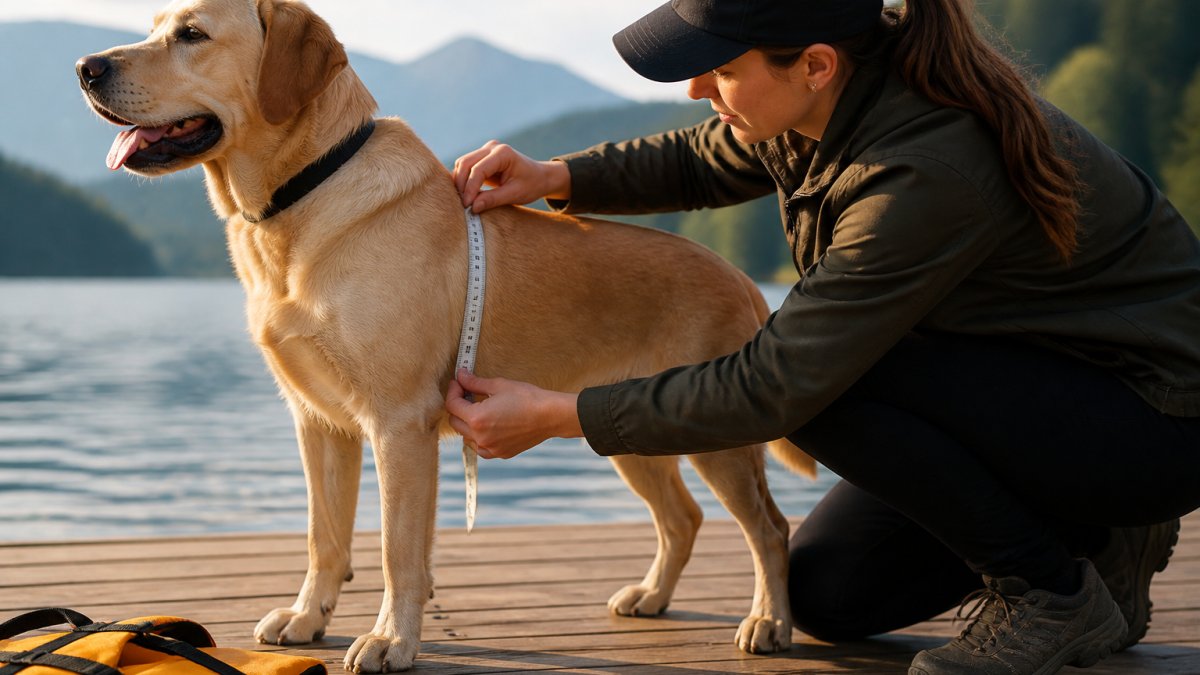
Measuring a dog for a life jacket takes one number: chest girth at the widest point of the ribcage, just behind the front legs. Wrap a soft tape snug around that spot, note the measurement, and match it to the size chart.
That's the whole method. Everything else is adjustment.
Here's how to do it well:
- Stand the dog on level ground with feet square under the body
- Find the widest point of the ribcage, just behind the front legs
- Wrap a soft measuring tape around that point, keeping it level
- Pull snug, then slide one finger under the tape to confirm fit
- Record the number in centimeters and match it to the vest's size chart
- Re-measure before every season, especially for puppies and seniors
Fit should be snug but not tight, with room for one finger between the vest and the dog's body. A vest that shifts side to side will chafe. One that pinches restricts breathing on a hard swim.
Benefits of Dog Life Jackets for Large Breeds
Large breeds gain the most from a properly fitted vest, and they're also the hardest to fit. That's the tension most buyers don't anticipate.
A big dog generates more momentum in the water and tires faster on long retrieves. Flotation takes load off the shoulders and lets the dog conserve energy. The Boat U.S. Foundation gear testing found that neoprene-based vests provided the most secure fit for small-breed dogs, while lifting large dogs out of the water remained a design challenge. That finding is worth sitting with: the lift problem is real, and it's why handle construction matters most on big dogs.
What large-breed owners should prioritize:
- Reinforced grab handles rated for the dog's actual weight
- Wide chest panels that distribute buoyancy without restricting the stride
- Adjustable straps at the chest and belly, since a single strap won't hold a deep-chested dog
- Quick-dry lining to prevent skin irritation under a wet vest
Dog Water Safety Tips Before You Hit the Lake
Good dog water safety starts on dry land, before the first paw touches water. A few minutes of preparation prevents most of the incidents that ruin a lake day.
Run through this before every outing:
- Check the water temperature; cold water drains a dog's strength fast
- Scout the entry and exit points for steep banks or slippery rock
- Confirm the vest fits with the dog standing and moving
- Pack fresh water; lake water carries risks dogs shouldn't drink
- Set a time limit and watch for paddling that turns frantic
- Keep a long line on shore for strong currents or boat traffic
Watch the tail and the head. A dog having fun holds its head high and paddles steadily. A dog in trouble drops the rear end, angles its head up sharply, and starts pawing at the water rather than through it. Pull them out at that point, not after.
Maintaining Dog Outdoor Gear So It Lasts More Than One Season
Maintaining dog outdoor gear comes down to three habits: rinse after every use, dry fully before storage, and inspect hardware before each trip. Skip any one of them and a good vest becomes next season's replacement.
Salt, lake minerals, and mud all degrade webbing and stitching. Rinse the vest in fresh water, hand wash with mild soap, and hang it to dry out of direct sun. Never machine dry a flotation vest; heat warps foam and shrinks webbing.
Inspect before you pack it away:
- Stitching at handle and D-ring attachment points
- Strap adjusters for cracks or stiffness
- Foam panels for compression or waterlogged softness
- Reflective trim for peeling
Store the vest loose, not compressed under other gear. Foam that stays crushed loses buoyancy over time.
Vest vs. Jacket: Matching the Dog Life Vest to the Water Activity
A vest and a jacket are not the same product, and the distinction decides which one you buy. Industry guidance now separates lighter vests built for casual swimming from high-buoyancy jackets built for active water sports, per EZ Dock's 2026 guidance.
| Feature | Casual Vest | Performance Jacket |
|---|---|---|
| Buoyancy | Moderate, front-loaded | High, full-body distribution |
| Best for | Dock swimming, shoreline wading | Boating, paddling, retrieves |
| Handle | Single grab loop | Reinforced multi-point handle |
| Fit | Adjustable, relaxed | Snug, strap-locked |
| Typical use | Short sessions | Long sessions, cold water |
Pros of a casual vest: lighter, easier to put on, more comfortable for a dog that swims briefly. Cons: less lift for tired dogs and weaker handles for lifting.
Pros of a performance jacket: more flotation, better handles, holds position in chop. Cons: bulkier on land and slower to dry.
Match the gear to the activity, not to the dog's size alone. A Great Dane wading at the dock needs less jacket than a Labrador retrieving in open water.
Conclusion
The hard part of water safety isn't buying a vest; it's buying the right one and keeping it in working condition. Measure the chest girth, check the handle stitching, rinse the gear after every trip, and match the flotation to what your dog actually does in the water.
Danielson Cove built its Pet Life Vest for exactly that job. It carries bright reflective trim for visibility, adjustable straps for a secure fit, and a durable water-resistant shell with a quick-dry lining. At $36.79, it's a straightforward piece of safety equipment for dogs who earn their lake days. Every purchase also supports our commitment to donate 15% of profits to Daisy's Dane Sanctuary, a Great Dane rescue, because caring for dogs is the whole point of what we do.
Add to cart and get your dog fitted before the next trip.
Frequently Asked Questions
Do all dogs need a life vest for swimming?
No, but far more dogs need one than owners assume. The American Kennel Club notes that some breeds lack the physical build for efficient swimming, so a vest is a safety requirement rather than an accessory. Flat-faced breeds, heavy-chested dogs, seniors, and puppies tire quickly in open water. Even strong swimmers benefit from a handle for lifting and reflective trim for boat visibility. There is no official U.S. Coast Guard certification for dog life vests, so fit and flotation testing matter more than a label.
How do I know if my dog's life vest fits correctly?
Measure chest girth at the widest point behind the front legs, then follow the size chart. A correct fit is snug but not tight, with room for one finger between the vest and your dog's body. Check three things: the vest should not slide side to side when you tug the handle, the neck opening should not press on the throat, and your dog should move freely without chafing at the armpits. Test the fit in shallow water before any deep-water outing.
What features should I look for in a high-quality dog life jacket?
Prioritize flotation concentrated around the neck and chest, a sturdy grab handle rated for your dog's weight, and reflective trim for visibility. Adjustable straps at the chest and belly keep the vest from riding up. Quick-dry lining and water-resistant material prevent saturation and odor. Boat U.S. Foundation testing found neoprene-based vests provided the most secure fit for small breeds, though lifting large dogs out of the water remains a design challenge, which makes handle placement critical for big dogs.
How do I introduce my dog to wearing a life vest?
Put the vest on indoors first and pair it with treats and play for short sessions. Let your dog wear it around the yard for ten to fifteen minutes at a time before adding water. At the shore, start in shallow water and stay close. Never toss a dog into deep water to test a vest. Watch for signs of stress like freezing, excessive panting, or refusal to move, and remove the vest if chafing appears at the shoulders or armpits.