


Red Rock Outdoor Gear Alternatives for Hikers
Table of Contents
- Why Hikers Look Beyond Red Rock Outdoor Gear
- What Makes Durable Hiking Gear Stand Out
- Best Hiking Gear for Day Hikes: Essential Features
- Hiking Backpack Features That Matter Most
- Red Rock Outdoor Gear Review: What Hikers Report
- Building Your Hiking Kit with Proven Alternatives
- Conclusion
- Frequently Asked Questions
Last Updated: October 16, 2026
Why Hikers Look Beyond Red Rock Outdoor Gear
When you're planning a multi-day backcountry trip, your gear choice matters more than almost anything else. Some seek outdoor gear alternatives to Red Rock for specific reasons: weight concerns, durability questions, or simply wanting to explore what else performs well on the trail. The hiking gear and equipment market was valued at $22.4 billion in 2025 and is projected to reach $38.6 billion by 2034, with a reported 6.2% compound annual growth rate according to Dataintelo's Hiking Gear and Equipment Market Research Report 2034, reflecting how seriously outdoor enthusiasts take their equipment investments.
One brand doesn't suit every hiker. Your choice depends on pack capacity, hydration integration, weight tolerance, and how your gear performs in the conditions you face. Understanding what makes durable outdoor gear stand out helps you decide based on your actual needs rather than brand loyalty.
What Makes Durable Hiking Gear Stand Out
Durability isn't about lasting forever, it's about lasting through the conditions you'll actually encounter. When comparing alternatives, the useful question isn't "is this durable?" but "durable against what, and at what weight cost?" Four elements decide that: fabric denier, seam construction, zipper hardware, and how the harness attaches to the bag.
Fabric Denier and Coating: Reading the Label Like a Spec Sheet
Denier (D) measures the linear mass of the yarn and is the fastest way to compare two packs.
Coatings matter as much as the weave. Polyurethane (PU) coatings are waterproof but can peel in humid storage; silicone coatings are lighter and more UV-stable but harder to seam-seal. DWR finishes shed light rain but degrade with abrasion and washing.
Seams, Zippers, and Stress Points: Where Packs Actually Fail
Seams fail before fabric does. Load-bearing seams where shoulder straps, hip belts, and compression straps meet the body should be double-stitched or bar-tacked at anchor points. Flat-felled seams distribute stress better than overlapped seams.
Zippers are the second failure point. Coil zippers are lighter and more flexible; molded-tooth zippers resist grit better and are common on main compartments.
Weather Resistance and the Weight Trade-Off
Water resistance comes in three tiers: DWR-treated fabric (sheds light rain, wets out in sustained weather), coated fabric with taped seams (handles hours of rain), and fully waterproof welded construction (heaviest, usually overkill for three-season hiking).
Every step up in denier, coating, and seam reinforcement adds grams. A 30L day pack in 210D ripstop with a PU coating might weigh around 1.5 pounds; the same capacity in 600D with taped seams can weigh 2.5 pounds or more.
How This Applies to Your Kit Beyond the Pack
The same logic, match the material to the conditions, applies to accessories. Our Down Compression Outdoor Storage Bag uses 40D Silnylon Ripstop: light enough to disappear into a pack, tightly woven enough to keep a sleeping bag dry. Our Carabiner uses aircraft-grade aluminum with a hard-anodized finish and a 25 kN breaking strength rating. And our Ultralight Carbon Fiber Five-section Folding Trekking Pole pairs carbon fiber shafts with reinforced aluminum alloy connectors, light where it can be, reinforced where stress concentrates.


Best Hiking Gear for Day Hikes: Essential Features
Day hikes demand less total weight but still require reliable hydration, weather protection, and organized storage.
Pack Capacity and Storage Organization
A day pack typically ranges from 15 to 30 liters. Too small and you're cramped; too large and you overpack. The best use compression straps to cinch down your load and multiple compartments to organize without rummaging.
Look for a dedicated hydration sleeve or attachment points for a water bladder, plus hip-level pockets for snacks and sunscreen. Our Down Compression Outdoor Storage Bag uses 40D Silnylon Ripstop to protect gear from moisture while minimizing pack space.
Hydration System Integration
Most modern packs include a hydration bladder sleeve. The best position the bladder close to your back for balance, with the tube routed along the shoulder strap so it won't catch on branches.
If a pack lacks a hydration system, verify it has secure attachment points for external bottles. A Carabiner with a smooth-locking gate, like our aircraft-grade aluminum model with 25 kN breaking strength, lets you clip gear securely without accidental release.
Hiking Backpack Features That Matter Most
Overnight backpacks carry heavier loads over multiple days, often in challenging weather.
Comfort and Load Stability on the Trail
A comfortable pack distributes weight across your hips and shoulders, not your neck and lower back. Padded hip belts transfer most of the load to your pelvis, where your body handles weight most efficiently.
Load stability matters equally: your pack shouldn't shift side to side, and heavier items should sit close to your back at mid-torso level.
Weight and Portability for Extended Trips
An ultralight backpack might weigh 2 to 3 pounds; a traditional expedition pack weighs 4 to 5. The difference compounds over days. Lighter packs use minimal padding and thinner materials, so they're less durable under heavy loads, save weight, potentially sacrifice longevity.
Our Travel Bed packs down to 14" × 6" × 6" while maintaining a reinforced 600D base, comfort without the bulk.
Red Rock Outdoor Gear Review: What Hikers Report
Red Rock Outdoor Gear builds packs marketed for tactical and outdoor use in the mid-range price tier. The honest summary for hikers: these packs are built around tactical priorities, and tactical priorities don't always map cleanly onto trail priorities.
Ultralight Carbon Fiber Five-section Folding Trekking Pole →
Where the Tactical Design Shows Up on the Trail
Tactical packs are designed around modularity and abrasion resistance: heavier denier fabric, MOLLE webbing rows for attaching pouches, and reinforced stitching. On a trail, those features cut two ways.
The cost is weight and bulk. A tactical-style pack in the 30L-40L range commonly weighs noticeably more than a hiking-specific pack of the same capacity, and that extra weight compounds on every step.
Fit and Harness: The Most Common Complaint
Tactical packs often use a one-size-fits-most harness with fixed or minimally adjustable torso length; hiking packs usually offer adjustable torso lengths and sized hip belts.
Test any pack loaded, not empty. Put 15-20 pounds in it, walk a mile, and check whether the hip belt is carrying the weight or your shoulders are. A pack that feels fine on the shop floor can feel very different after an hour on a grade.
Hydration Integration: Check Before You Buy
Many tactical-style packs include a hydration sleeve, but details vary. Check three things: whether the sleeve holds a standard 2L or 3L reservoir, whether the hose port is on the correct shoulder for you, and whether the routing keeps the bite valve accessible without a snagging loop. Some route the hose through the back panel rather than the shoulder strap, which can leave it flopping.
Durability and Warranty: What to Look For
Tactical packs generally hold up well against abrasion, and the heavier fabric is a real advantage if you're hard on gear. Watch the same failure points as any pack: shoulder-strap anchor seams, the main zipper, and the hip-belt attachment. Before buying, read the warranty terms and note what's covered (defects in materials and workmanship) versus what isn't (normal wear, abrasion, zipper wear from grit).
When an Alternative Makes Sense, and When It Doesn't
Red Rock-style tactical packs are reasonable if you want MOLLE attachment points, do shorter trips, and value abrasion resistance over light weight. They make less sense if you're logging long miles, carrying heavy loads over multiple days, or have a torso length that doesn't match a one-size harness.
The useful move isn't to replace the brand wholesale. Identify which feature you actually need, MOLLE, hydration, load carry, or low weight, and pick the pack that does that one thing well.
Building Your Hiking Kit with Proven Alternatives
Rather than recommending a single replacement, consider what you actually need. Start with your pack, then pair it with accessories that address your specific conditions.
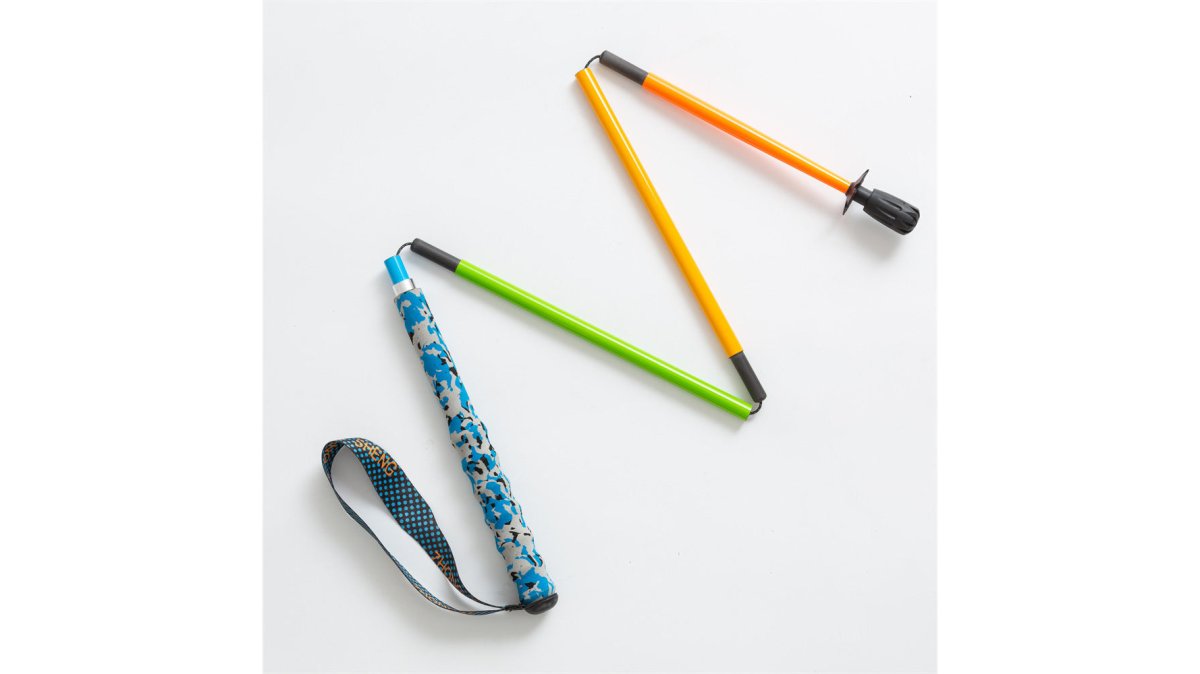
For trekking poles, weight and reliability matter equally. Our Ultralight Carbon Fiber Five-section Folding Trekking Pole at $84.16 offers the strength-to-weight performance needed for steep terrain and long-distance treks.
For storage, compression bags prevent shifting and protect items from moisture. Our Down Compression Outdoor Storage Bag at $15.42 uses water-resistant Silnylon Ripstop in sizes from 4L to 35L, available in six colors, so you can organize by category without unpacking everything.
For camp comfort, reliable sleep systems make multi-day trips sustainable. Our Thickened Moisture-Proof Camping Mat at $33.30 provides insulation and cushioning while resisting ground moisture, manufactured in the USA. The Travel Bed at $94.51 sets up in seconds, packs down to minimal size, and uses ripstop polyester with a reinforced base.
Secure attachment points matter more than most hikers realize. Our Carabiner at $7.93 uses aircraft-grade aluminum with a hard-anodized finish for corrosion resistance, and its smooth-locking gate prevents accidental release when clipping gear to harnesses or packs.
| Gear Type | Purpose | Key Feature | Price |
|---|---|---|---|
| Trekking Pole | Weight reduction & terrain support | Ultralight carbon fiber, 5-section collapse | $84.16 |
| Compression Bag | Gear organization & moisture protection | Water-resistant Silnylon, multiple sizes | $15.42 |
| Carabiner | Secure attachment | Aircraft-grade aluminum, 25 kN strength | $7.93 |
| Camping Mat | Insulation & cushioning | Moisture-proof, USA-manufactured | $33.30 |
| Travel Bed | Compact camp comfort | Ripstop polyester, rapid setup | $94.51 |
Conclusion
Choosing outdoor gear alternatives to Red Rock Outdoor Gear comes down to matching your needs: weight tolerance, trip duration, terrain difficulty, and weather. The market keeps expanding because hikers recognize that one-size-fits-all solutions rarely deliver optimal performance.
At Danielson Cove, we build gear for people who demand reliability in every excursion. Our trekking poles, compression bags, carabiners, and camp comfort solutions are engineered for serious outdoor use, because those who care for others deserve a place to be cared for too.
Frequently Asked Questions
What are the best alternatives to Red Rock Outdoor Gear for hikers?
Hikers seeking outdoor gear alternatives should prioritize durability, stitching quality, and weather resistance. Look for packs with reinforced seams, water-resistant materials, and proven trail performance. Consider gear that offers modular storage, reliable hydration attachment points, and comfortable load distribution. Danielson Cove provides ultralight trekking poles and compression storage bags designed for serious backpackers who demand reliability without excess weight.
What should hikers look for in durable hiking gear?
Durable hiking gear requires attention to construction quality and material selection. Examine stitching patterns, double-stitched seams resist tearing better than single stitches. Check for ripstop fabrics and water-resistant coatings that withstand repeated cleaning and exposure. Hardware like carabiners should feature corrosion-resistant finishes. Test compression straps and zipper mechanisms before long trips. Danielson Cove's carabiner uses aircraft-grade aluminum with hard-anodized finish for lasting durability in all weather.
How do you choose hiking gear for different trail conditions?
Match gear to your specific trail demands. Day hikes require lightweight daypacks with quick-access storage and hydration compatibility. Overnight backpacking needs larger capacity with compression straps for weight distribution. Backcountry trips demand ultralight construction and weather sealing. Consider terrain difficulty, steep descents benefit from trekking poles that reduce knee strain. Danielson Cove's five-section folding trekking poles adjust from 24 to 54 inches, fitting various heights and terrain needs, while compression bags protect sleeping systems from moisture.
What features matter most in a hiking backpack?
Hiking backpack features should prioritize comfort, capacity, and organization. Load stability depends on padded hip belts and internal frames that distribute weight to your hips rather than shoulders. Compression straps keep gear centered and prevent shifting. Multiple compartments separate wet gear from dry supplies. Hydration bladder sleeves with external pockets speed water access. Weight matters, lighter packs reduce fatigue on long distances. Danielson Cove's storage solutions like compression bags minimize pack space while keeping gear organized and protected.
Gear failures on the trail create real consequences. Choose equipment tested by hikers who demand durability and performance. Explore Danielson Cove's curated selection of hiking essentials and build a kit that handles your wildest adventures with confidence.